THE SHORT ANSWER
One firm fact came through: the Justice Department roster names InfoTracer among sites selling vehicle history reports that include NMVTIS title data, under a different approved provider. Its price, report contents and cancellation terms sat behind a block, so none appear here. Read those on its checkout page yourself, and try the free insurer and recall lookups before buying anything.
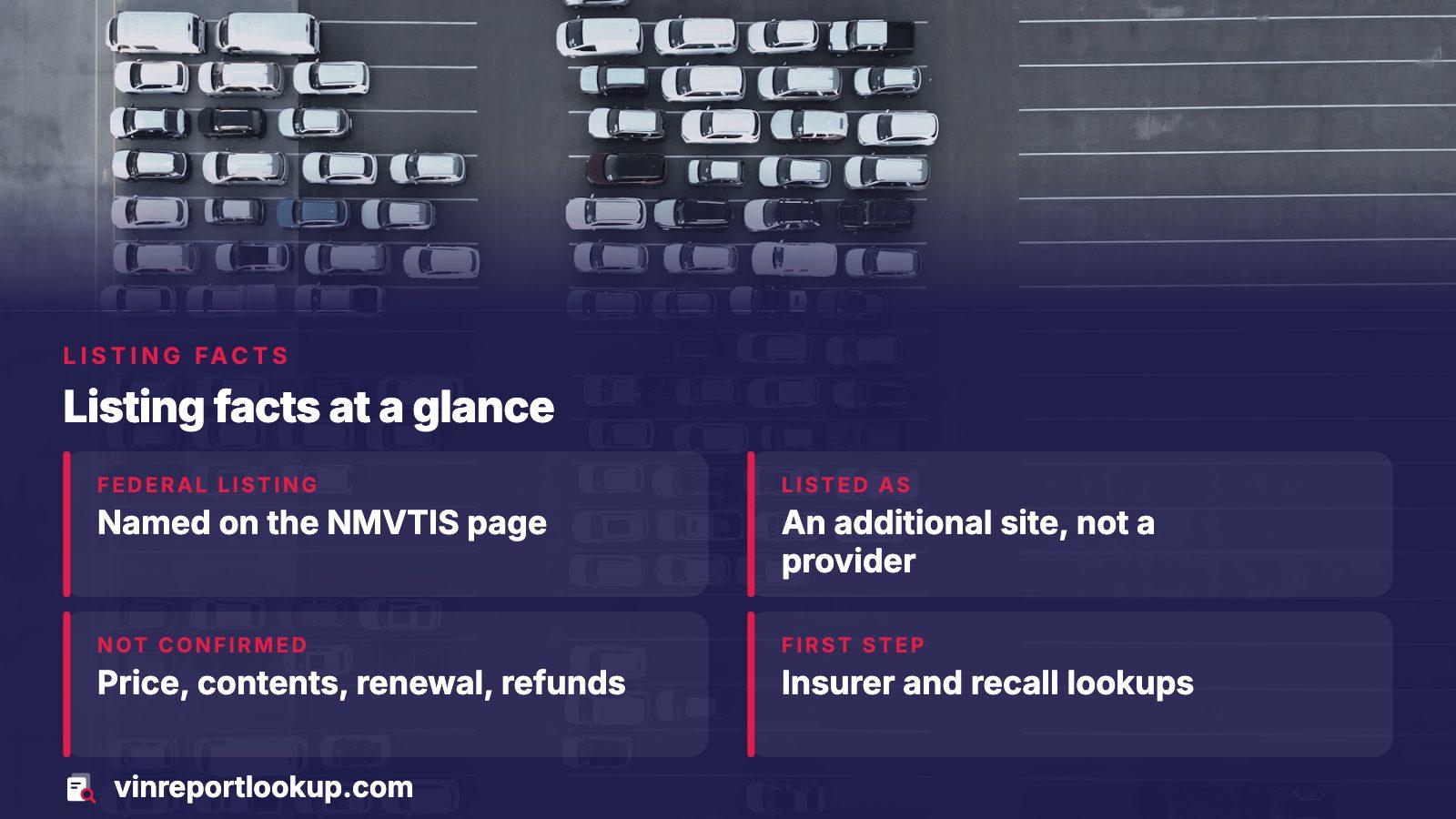
- Federal listing
- Named on the Justice Department NMVTIS page as a seller of reports with title data
- Listed as
- An additional site under another approved provider, not a provider itself
- Not confirmed
- Price, report contents, renewal and refund terms
- Free first step
- NICB VINCheck, up to 5 searches in 24 hours
What we could read, and what we could not
We loaded InfoTracer's home page and its VIN page twice, first with a plain request and then in a browser window. Each time the answer was a Service Not Available error. We left the block alone, so nothing below reflects what InfoTracer says about itself.
That limits a review more than people expect. Without the company's own checkout screen, terms and sample report, any claim about cost, accuracy or cancellation would be repeated hearsay. We left those out. What follows rests on the Justice Department, the National Insurance Crime Bureau and NHTSA, whose pages opened.
How to use this page
Treat it as a checklist for evaluating InfoTracer, or any other seller, on the screens you can see yourself right before paying.
Where the federal government lists InfoTracer
Washington maintains a roster of businesses cleared to handle the national title database for consumers. InfoTracer is not a main entry there. It sits beneath GoodCar, which the roster describes as an approved provider with extra websites that sell reports carrying NMVTIS information. Recordsfinder.com and StateRecords.org are named on the same line.
That supports one claim only: the title portion of an InfoTracer report can draw on the federal database. Price, layout, accuracy of the other sections and customer treatment are outside it. The roster is alphabetical and the department says it favors no seller, so being on it is not an endorsement.
What a title-data listing does and does not buy you
Through the national system a buyer can learn who holds title, the newest odometer figure, any brand such as junk, salvage or flood, and sometimes theft history. The department calls its own report deliberately brief and treats a clean one as encouraging.
It is blunt about the gaps. Coverage reaches nearly nine in ten vehicles by its count, yet just over half of the states feed data in, so a search can miss a brand and report nothing wrong. States label cars differently as well: damage one state calls salvage may carry no label in the next.
- States keep more in their own title files than the national system carries, so request the state's version when the car matters to you.
- An insurer's total loss label can stick to a stolen car that was found undamaged after 30 days.
- A clean title line is a statement about reported records, not about how the car was driven or repaired.
Run the free lookups before any paid one
Two no-cost tools cover a slice of what paid reports sell. The insurers' crime bureau runs VINCheck, which looks your VIN up against stolen, salvage and flood entries from member insurers, limited to 5 lookups a day per connection. It wants an accurate 17-character VIN, and the bureau itself cautions that the tool falls short of a complete history.
The federal recall lookup by VIN lists open recalls only. Repaired campaigns, very old ones past 15 years, small-maker campaigns and imports will not appear. Zero open recalls is welcome news, but it says nothing about crash damage.
When both come back quiet and the seller's account holds up, a paid report is the next layer, mainly for accident, odometer and ownership records that neither tool covers.
Questions to settle on the checkout page
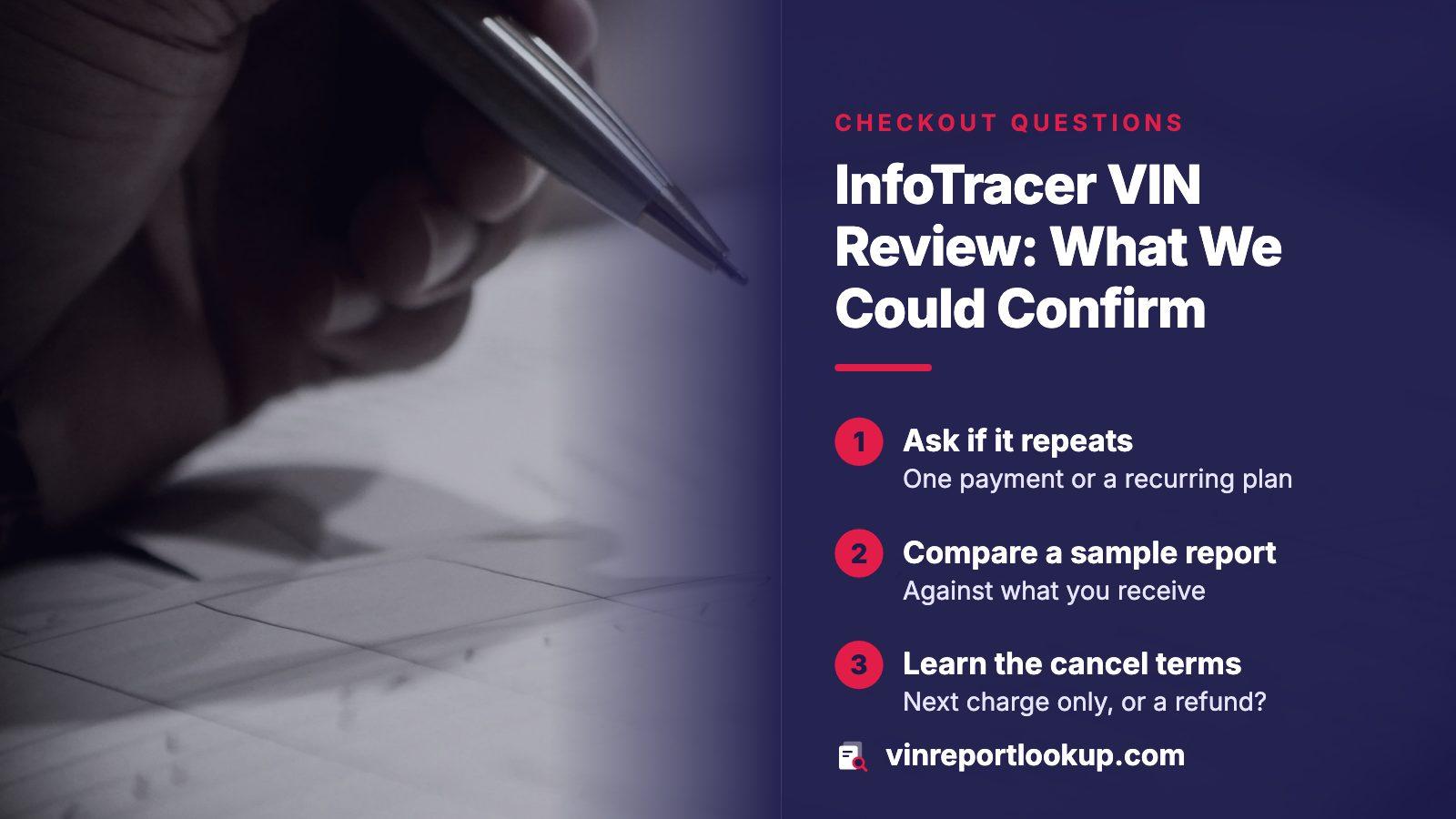
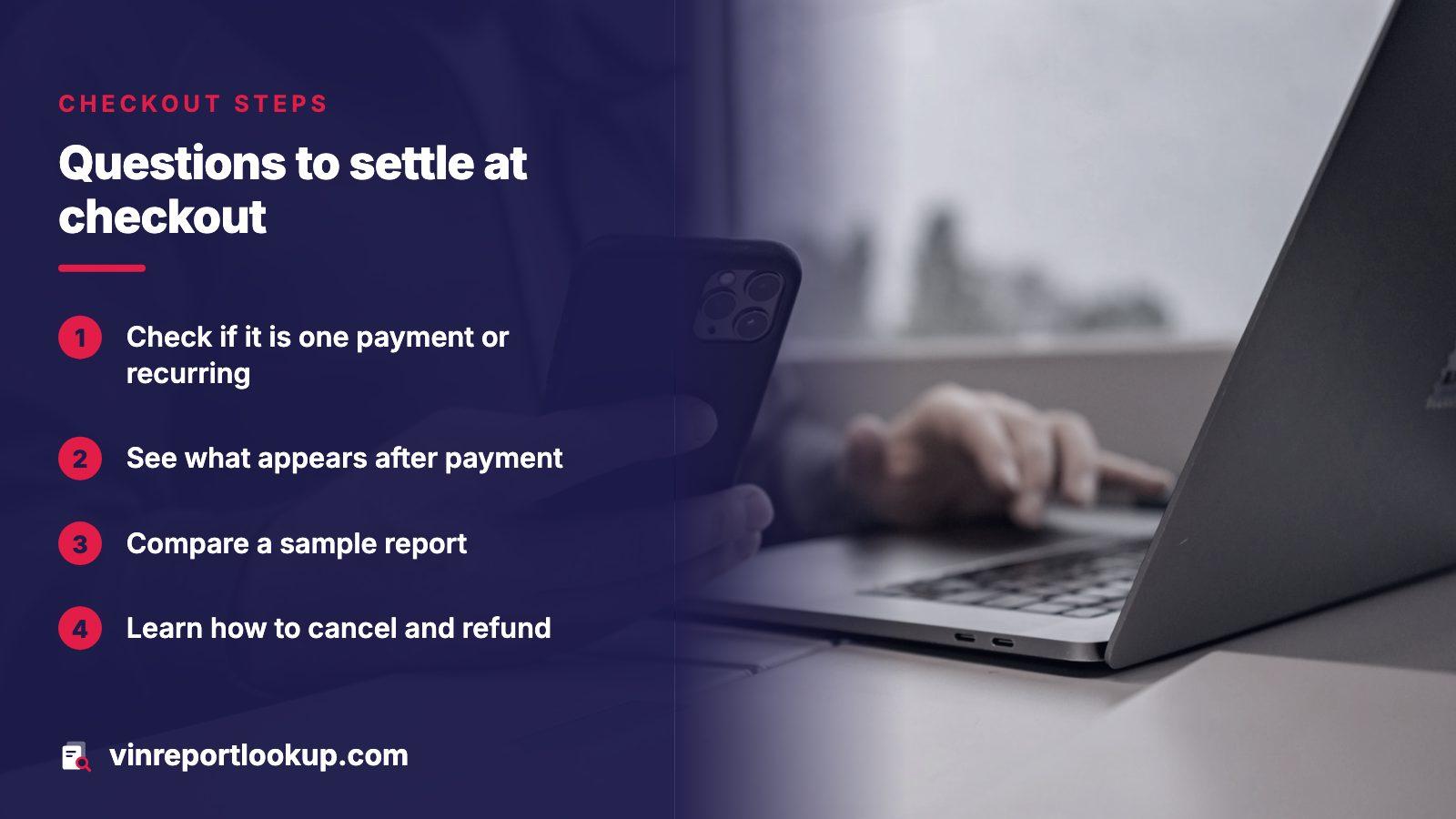
Since we cannot print InfoTracer's terms, here is what to read before entering a card number on its site or anyone else's. Screenshot the answers; terms change.
- Is the charge one payment for one VIN, or does it start a recurring plan? Look for the renewal price, not just the first charge.
- What exactly appears after payment: a report for this VIN, or access to a wider search account?
- Is there a sample report you can compare against what you receive?
- How do you cancel, and does cancelling stop only the next charge or also refund the first one?
- Which refund cases does the company list, and does a clean report count?
- Does the company say its title records come from the federal database, and does that match the Justice Department roster?
Reading whatever report you end up with
Whichever seller you pick, read the report against the car in front of you. Compare the odometer history with the dashboard reading, the number of owners with what the seller told you, and any brand with the title the seller hands over.
A thin report is not good news by itself. Gaps in state reporting mean a quiet history can reflect missing data. If the report is empty for a car with a long life, ask why, and pair it with a mechanic's inspection.
Red flag
A salvage, junk or flood label the seller never brought up. Get the physical title and a written explanation before discussing price.
The route this site offers instead
At VINReportLookup you type the VIN and get a preview with no charge, which shows what comes back before you commit. Buying the report is a single payment. People weighing several cars can take it in a pack of 3, 5 or 10, and there is no plan to cancel afterward.
Current figures live on the pricing page. The useful comparison is our single charge against the full cost at InfoTracer once you have read its renewal and refund terms yourself.
Where this information comes from
- Justice Department: approved NMVTIS data providers — Where InfoTracer is listed and what the listing means.
- Justice Department: NMVTIS for consumers — What the title system covers, and why a search can miss records.
- NICB: VINCheck — The free theft, salvage and flood lookup and its stated limits.
- NHTSA: check for recalls — What a VIN recall search shows and leaves out.
Sources and photos: Facts checked against the sources above in November 2026. Photos by Masjid MABA, Anastasiia Nelen and Iain on Unsplash; diagrams by VINReportLookup.
Keep reading
- Vehicle history report providers: who sells VIN reports and how they differThe wider field of report sellers and how they differ.
- Vehicle history report scams: how to spot a fake report seller before you payWarning signs to look for in any report seller's checkout.
- Carfax vs NMVTIS: what each report shows and which to buyHow the federal title record compares with a private report.
- Vehicle history report cost: what each kind charges and coversWhat reports tend to cost and how pricing structures differ.
Frequently asked questions
Is InfoTracer an approved NMVTIS provider?
Not on its own, according to the Justice Department page we read. The page lists InfoTracer as an additional website owned by an approved provider that sells reports including NMVTIS information. That matters for the title section only. It does not vouch for the other parts of a report.
How much does an InfoTracer VIN report cost?
We could not confirm it. InfoTracer's pages returned a block error, and we do not print prices we did not read. Open its checkout page, note the renewal price and the cancellation steps, and compare that total with other sellers before paying.
Can I check a VIN for free instead?
Partly. The insurers' VINCheck covers stolen, salvage and flood entries, and the federal recall search lists open recalls. Neither shows accident detail, mileage history or owners, so a paid report fills the remainder.
Does a clean result mean I can skip the inspection?
No. It means nothing matching was reported to that database. The Justice Department cautions that reporting is incomplete, so a search can miss a problem. Add a test drive, the physical title and a mechanic's inspection.
What should I do if a report charges me twice?
Save the receipts and contact the seller's support first, quoting the VIN and purchase email. Then check how the charge was labeled. A recurring plan you did not intend is a cancellation question, so cancel first and ask your card issuer about the rest if support does not answer.
Now check the car itself
The guide explains what to look for. The report shows what this VIN has on record.