THE SHORT ANSWER
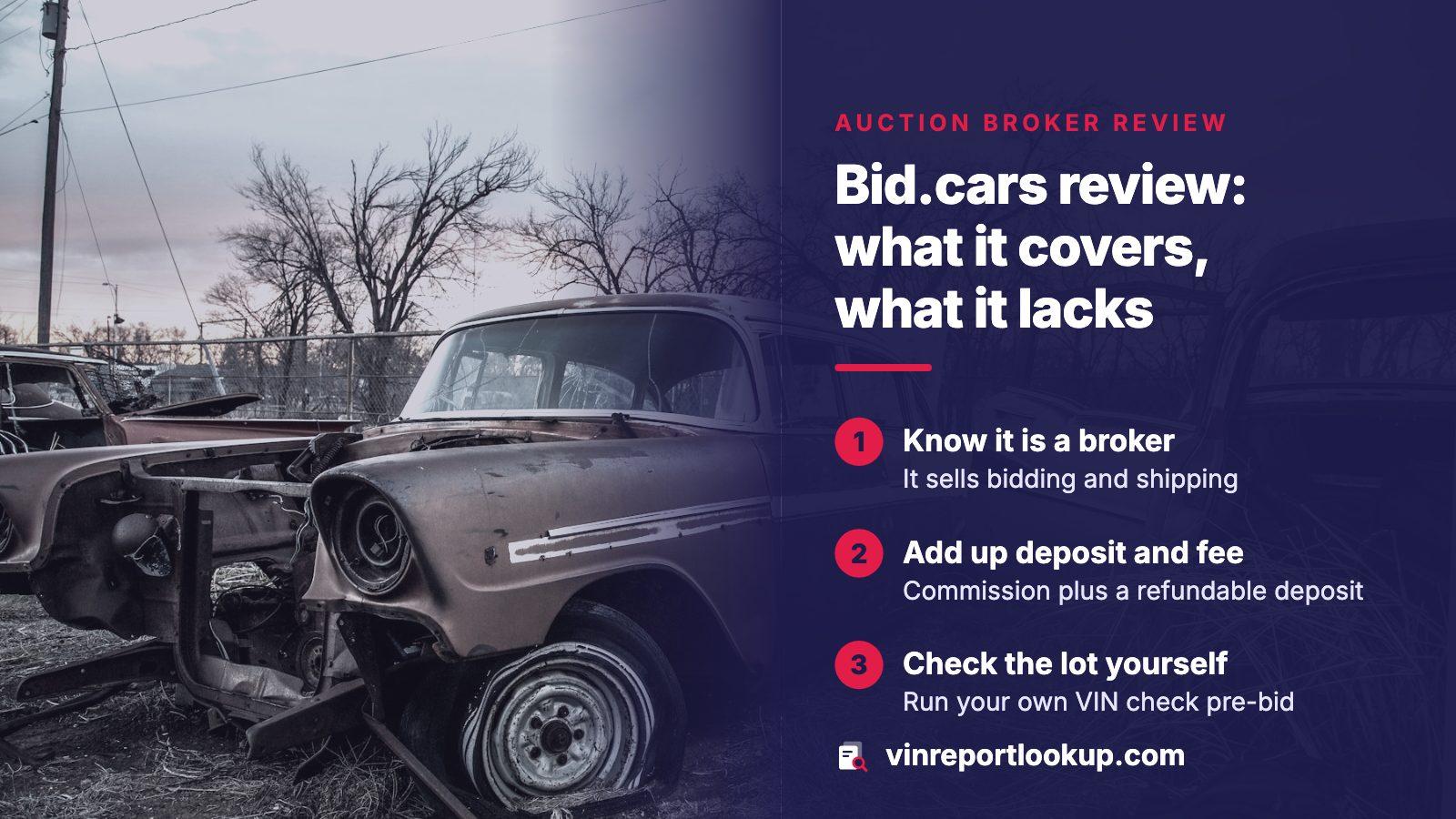
Based on the service's own pages, Bid.cars is a bidding and shipping broker, not a report seller. It charges a fixed commission, asks for a refundable deposit before you bid, and offers extra history reports only to users who have paid that deposit. Run an independent VIN check on any lot before you place a maximum bid, then compare the result with the photos.
- What it is
- Broker for Copart and IAAI lots, with shipping to Europe
- Commission
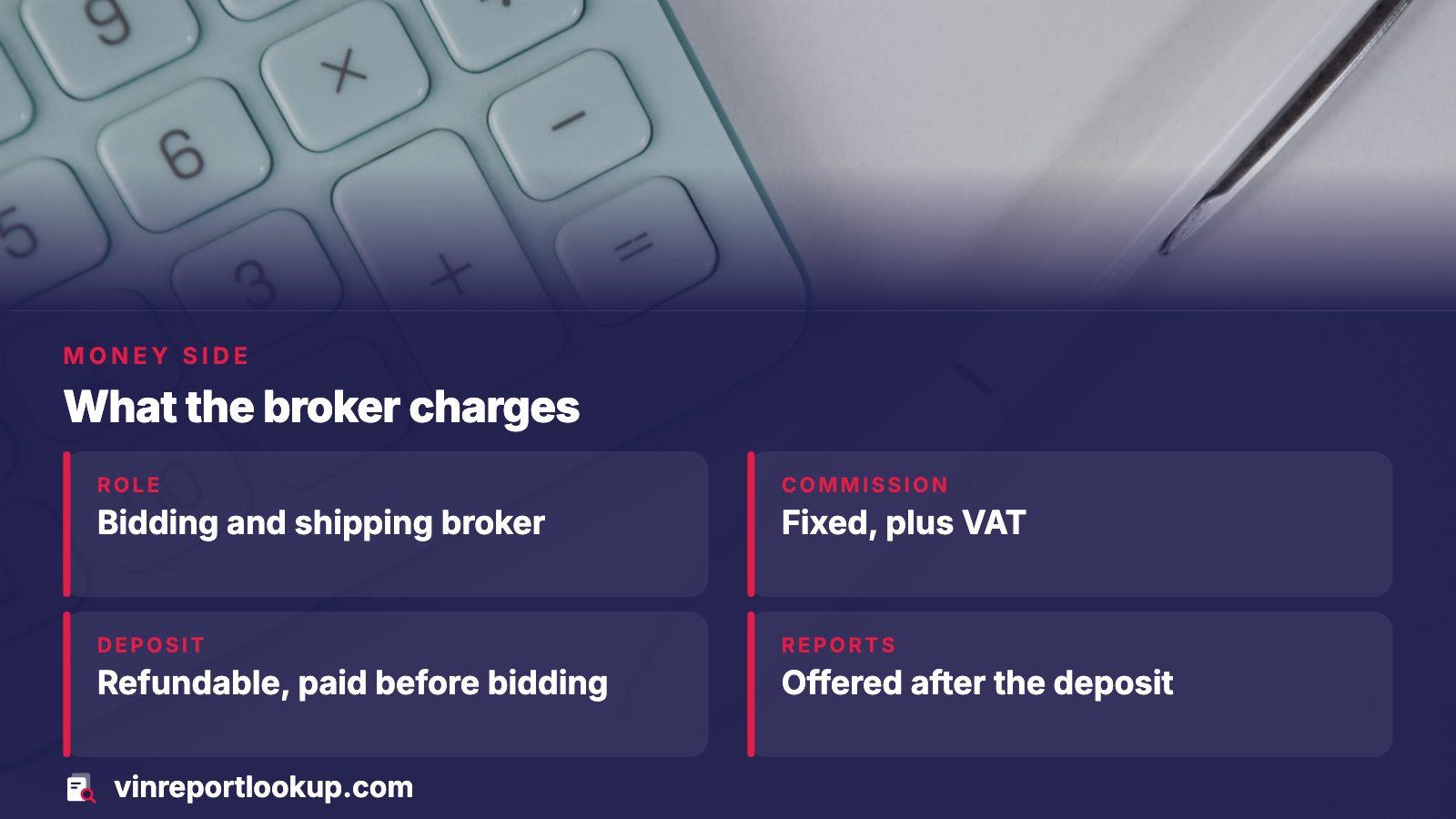
- 450 USD plus VAT, fixed
- Entry deposit
- 1,000 USD on the Basic plan, refundable
- Reports
- Offered only after a deposit is paid
What Bid.cars actually sells
The site presents itself as an auction-and-freight service for buyers in Europe. You search lots that Copart and IAAI have scheduled, set the most you will pay, and the broker bids for you. If you win, the broker arranges pickup in the United States, a container to Rotterdam, customs handling and, in nine countries, delivery to your door.
That makes it closer to a freight-and-bidding agent than a review site or a report vendor. Its about page says the company has sourced American vehicles since 2015 and has moved over five thousand of them. We could not check that figure independently, so treat it as the company's own statement.
The distinction matters for a reader searching for a review. You are judging a purchasing channel, and the useful question is what you can learn about a car before the money leaves your account.
How a purchase runs, step by step
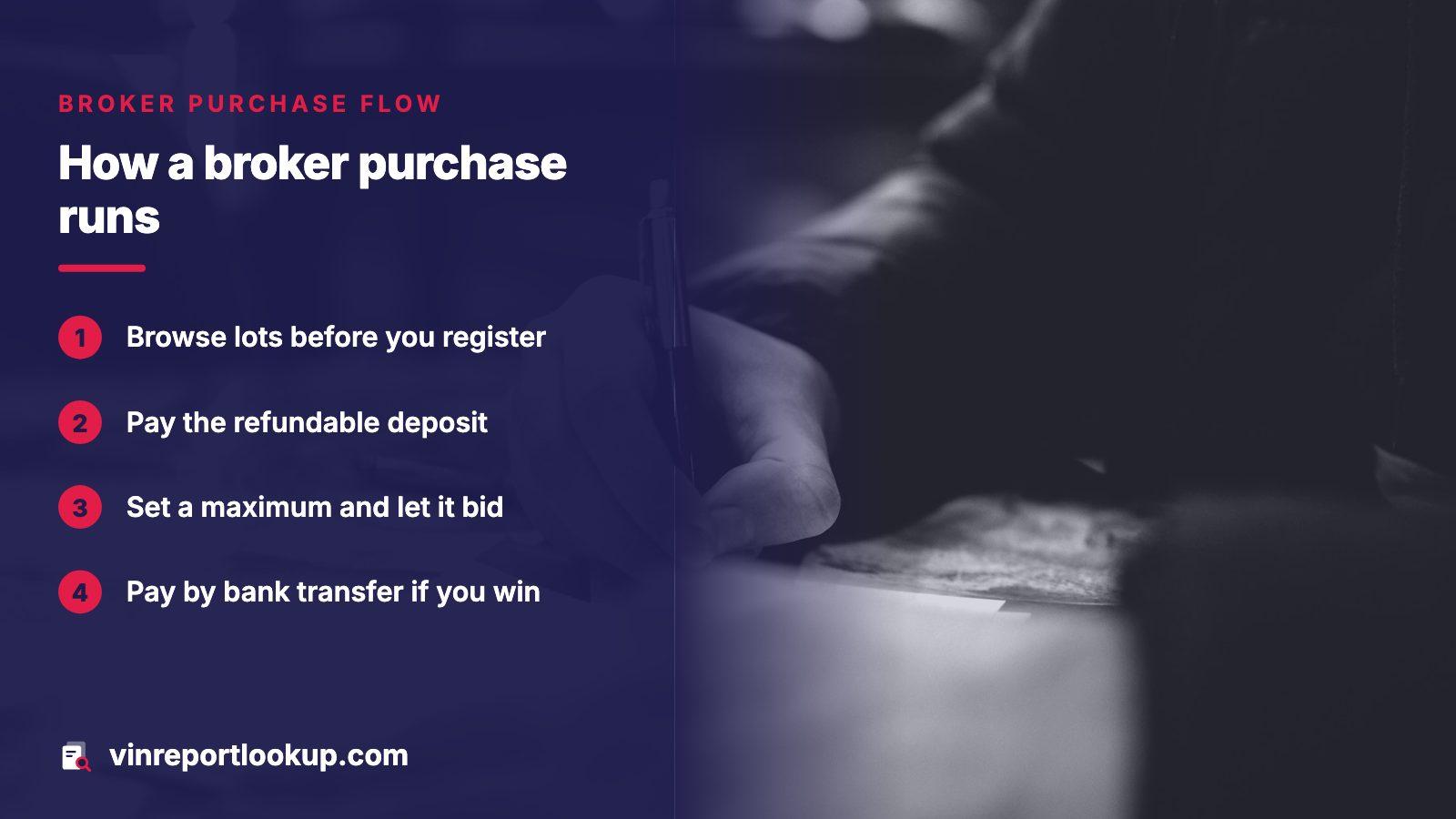
The how-it-works page lays out four stages, and the order is worth knowing before you commit.
- Browse lots without an account; you only register when you want to bid.
- Pay the refundable deposit that Copart and IAAI require, after which you can bid the same day.
- Set a maximum. A pre-bid phase lasting several days starts from zero, then a live auction follows, with the broker bidding up to your limit.
- If you win, pay by international bank transfer, and the broker collects the car and takes extra photos.
There is no point in the sequence where the service inspects the car for you. Its help center says it offers no pre-purchase consultation, no help choosing a vehicle and no repair estimates.
The money: deposit, commission and extras
Registration and bidding are free, but you need a deposit to bid. The site lists three plans, and the size of the deposit sets your ceiling.
| Plan | Deposit | Bidding limit | Cars at once |
|---|---|---|---|
| Basic | 1,000 USD | 10,000 USD | 5 |
| Professional | 2,500 USD | 50,000 USD | 10 |
| Enterprise | 5,000 USD | 200,000 USD | 20 |
The help center puts the commission at 450 USD plus VAT whatever the car costs, paid in euros shortly before arrival. Its calculator leaves out bank charges for wiring money to the USA, which it puts between 10 and 50 USD, and fees listed on a separate penalties page that we did not read. Budget for those before you set a maximum bid.
The information gap on the lot page
Here is the line that matters most for a buyer. The help center says the details on the site are all the data the company has about a given vehicle, and that buying at these auctions means leaning on photos and on your own skill at estimating repairs.
Photos show what a camera caught on one day. They do not show a title brand that was applied in another state, an odometer reading from an earlier sale, or a record that the car was reported stolen. Those facts live in title, insurance and salvage databases, and that is where a separate VIN report earns its fee.
Lot photos versus records
A clean-looking bumper tells you nothing about a flood brand. Pair the pictures with a record check before the pre-bid phase ends.
The history reports the service offers
Once a deposit is in, a user can ask for an additional history report on a lot. Per the help center, the monthly allowance is 5, 10 or 20 reports, scaled to the deposit, and the content is said to cover prior owners, crashes and servicing.
Two limits apply. You cannot see them until you have put money down, so they cannot help you decide whether to register at all. And we found nothing on the service's pages naming the data source behind them, so we cannot say how they compare with a federal title record or a commercial report. That is a gap in what we could confirm, not a finding of bad data.
What an independent VIN check should confirm
Copy the VIN from the lot page and run it before you commit your deposit to a bid. The Justice Department's consumer page explains why title data is worth the trouble: the federal system pulls entries from insurers, recyclers, salvage yards and state titling agencies, and it records brands such as junk, salvage and flood.
- Title brands, including any brand carried from another state
- Latest odometer reading against the number in the listing
- Theft records and insurer total-loss entries
- Open recalls that the next owner would inherit
Before paying, the preview on this site shows at no cost whether any records exist for the VIN. The full report costs one payment only, and the pricing page carries what is on offer now.
Reading the results against an auction lot
Most Copart and IAAI cars are there because an insurer or owner wrote them off, so a brand is expected rather than alarming. What you want to know is which brand and how it was reached.
The Justice Department notes that states apply different standards. A damaged car may get a salvage brand in one state yet escape it in a neighbouring one, and a flood car can likewise be branded by one state and left clean by another. A missing brand therefore does not prove a car was never damaged. The same page cautions that an insurer's total-loss label does not prove the car was scrapped.
Walk away if
The odometer in the record is higher than the listing, the title history shows a brand the listing leaves out, or the photos show damage in an area the records say was never claimed.
Who should use it, and who should look elsewhere
Bid.cars suits a buyer in Europe who already knows how to judge a salvage car and wants a single party to handle bidding, transport and customs. The fixed commission and the stated deposit rules are easy to find on its own pages, which counts in its favor.
It is a poor fit for someone who wants a vendor to vouch for the car. The service says plainly that it gives no inspection advice, and we found no promise of any. We make no claim about how its customers fare, because we did not find a source we could verify.
Whichever route you pick, treat the VIN report as the first step and the deposit as the second. For related reading, see the guides to history reports for auction cars and for salvage cars.
Where this information comes from
- BidCars: How it works — deposit plans, bidding stages, payment steps
- BidCars: Help center — commission, calculator limits, history report allowance
- BidCars: About us — company's own description and delivery countries
- DOJ: NMVTIS for consumers — what federal title data covers and why brands differ by state
Sources and photos: Facts checked against the sources above in November 2026. Photos by Leo_Visions, Owen Michael Grech and Sasun Bughdaryan on Unsplash; diagrams by VINReportLookup.
Keep reading
- Bidfax review: what we could confirm and what to use for a VIN report insteadanother auction-lot site and what it does and does not show
- Best VIN check for auction cars: what to run before you bidwhich report suits a car bought at auction
- Best VIN check for salvage cars: what a report must show before you buyhow to check cars that already carry a brand
- Carfax vs inspection: what each shows and which to buy firstwhat a report cannot replace on a salvage lot car
Frequently asked questions
Is Bid.cars a vehicle history report provider?
No. Its own pages describe a bidding and shipping service for Copart and IAAI lots. It does let depositing users generate extra history reports, but selling reports is not its main business, and the pages we read did not name the data source behind them.
Does Bid.cars charge to register?
Its how-it-works page says registration and auction participation are free. You do need a refundable deposit before you can bid. The commission, described in the help center as fixed, is owed only on a car you win.
Can I get a VIN report before paying the deposit?
The service's own reports are offered to users who have paid a deposit. You can run an outside check on the VIN from the lot page at any time, which is the safer order if you are still deciding whether to register.
Will a VIN report show everything about an auction car?
No. The Justice Department says states brand vehicles by different standards, and databases can return a clean result for a car that was damaged. Use the report together with the photos, and think about an in-person inspection at the port or yard.
Can I judge whether Bid.cars is trustworthy from this page?
Only partly. We read the service's own pages and can report what it states about fees, deposits and process. We could not verify customer outcomes or the source of its reports, so we make no claim either way.
Now check the car itself
The guide explains what to look for. The report shows what this VIN has on record.