THE SHORT ANSWER
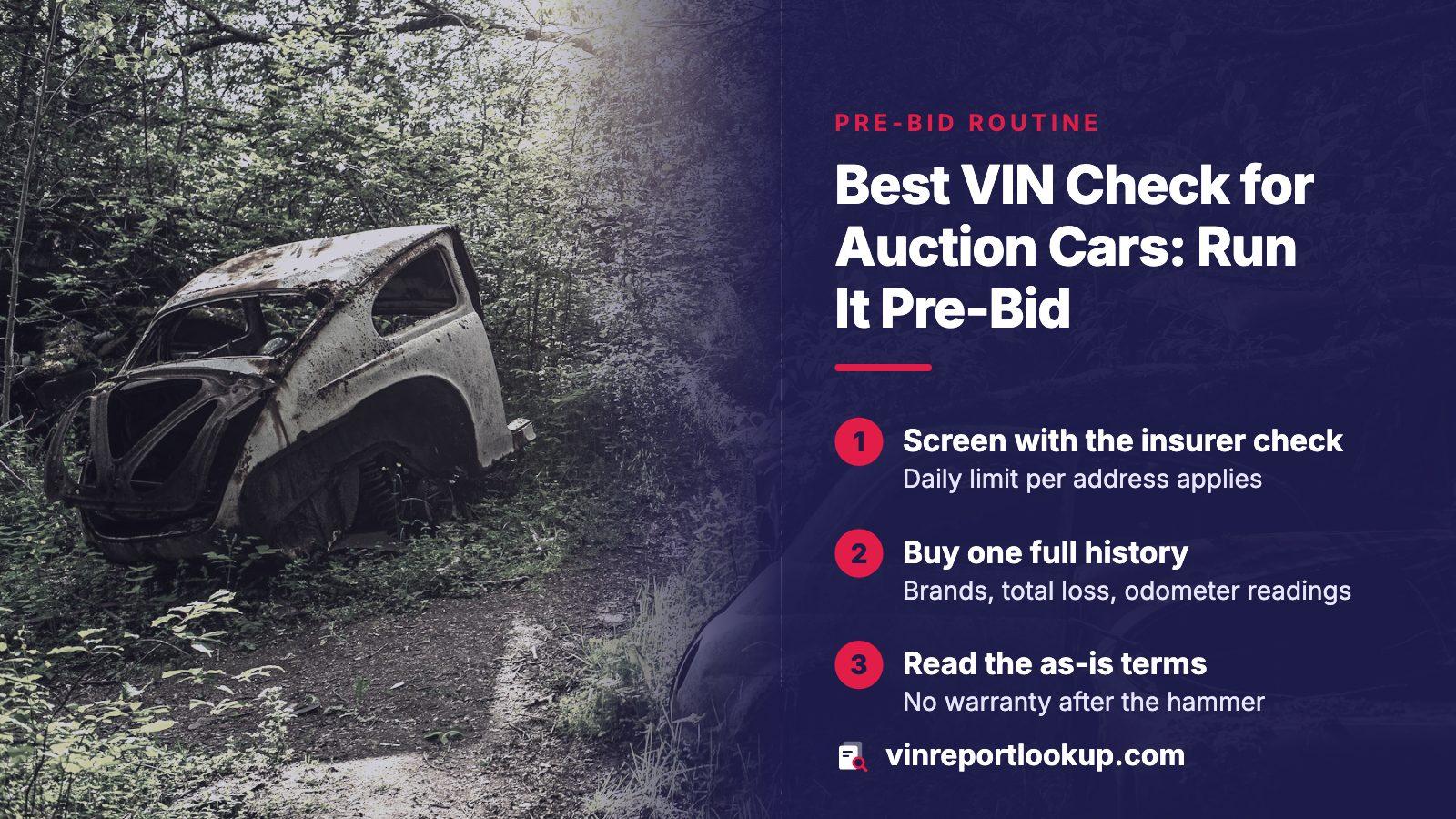
Before bidding, run the VIN through NICB's free insurer check, then buy one full history report that shows title brands, total-loss and salvage entries and odometer readings. Compare the title type in the listing with the report. If they disagree, or the report is thin, walk away or send an inspector. Never rely on the auction's own notes.
- Auction terms
- Sold as is, where is, no warranty
- Free insurer check
- NICB VINCheck, five searches a day per IP address
- Federal title system
- About 87% of vehicles covered, gaps remain
- VINReportLookup
- Free preview, one payment, no subscription
Why a car on an auction lot needs its own check
A dealer's used car comes with a seller you can question, a window of time and often a chance to drive it. An auction car gives you a few photos, a short description and a closing clock. The operator's own rules say the bidder alone must inspect and verify, and that the car is sold as is, where is, with no warranty. Whatever protection you want has to come from research you do before you register a bid.
That makes the VIN the one dependable handle you have. A history report hangs records from titling agencies, insurers and salvage yards on that number, so it describes the car even when the listing says little. Auction buyers need three answers: any brand on the title, any write-off by an insurer, and mileage that adds up.
What the auction listing will not promise you
Read the fine print of a salvage and insurance auction and you will find the notes are narrower than they look. The table below translates the common ones.
| Listing note | What it means in the operator's rules |
|---|---|
| Starts | The engine started and idled on arrival, nothing more |
| Run & Drive | Checked on arrival, no guarantee the car is roadworthy |
| Air bags intact | They looked undeployed on arrival; they were not tested |
| Damage photos | Not a full view; hidden damage may exist |
| Mileage | The auction accepts no responsibility for odometer errors |
The same rules even tell bidders who care about mileage to get a history report first. That advice comes from the auction itself, which is a decent reason to follow it.
Start with the free insurer check, then pay for the rest
NICB's VINCheck costs nothing. It looks up a VIN in files from member insurers and flags theft that was never recovered, salvage declarations and flood damage. Each IP address is capped at five lookups a day, enough for a shortlist of lots. Type the 17 characters carefully, because a wrong one can hide a match.
A clean answer is encouraging, not conclusive. NICB states that only member-insurer records are searched and police files are left out, so it is no stand-in for a full report. It points shoppers to paid reports built on title files, sale data and service entries. That is the gap a paid report fills.
How the two steps fit
Run the free check on every lot you like. Buy a full report only for the one or two cars you would actually bid on. The preview here shows you the VIN is recognized before you pay.
The records that decide an auction purchase
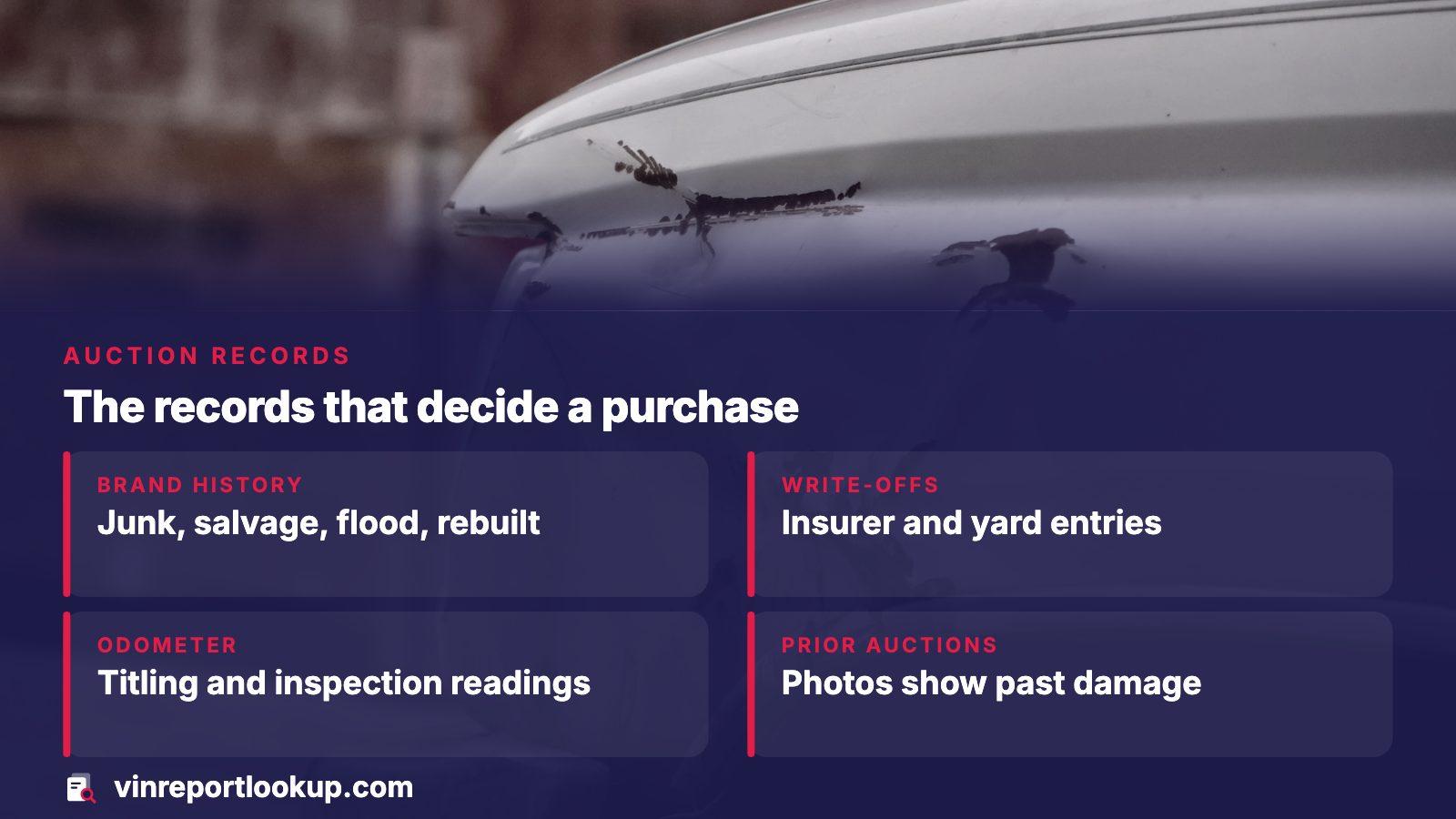
- Title brand history: junk, salvage, flood or rebuilt entries, and the state that applied each one.
- Write-offs and yard entries from insurers and salvage operators, with the date each was filed.
- Odometer readings taken at titling and inspection, so you can spot mileage that stalls or falls.
- Theft records, since a stolen car that was never recovered can surface at a sale.
- Prior auction appearances with photos, which show damage that the current listing may crop out.
- Open recalls, because a damaged car that was repaired cheaply may also be missing a safety fix.
Rank the sellers of reports on whether they show these items for your exact VIN, not on how long their feature lists run.
Title traps that bite after the hammer falls
A clear title in the listing is not the end of the story. The operator warns that a car sold clear may still show up as junk or salvage in later federal title reports, and that a state may change a title or brand after your purchase. You are told to verify the type and brand before you start repairs, which means a report belongs in your pre-bid routine, not your post-sale cleanup.
Salvage has a financial edge too. The operator's own blog says lenders may refuse financing on a salvage car, and that every state has its own route to a rebuilt title. Repairing the car does not make it legal to drive on the day you finish. Skipping the title step is also barred: the rules prohibit title skipping, so register the car in your name promptly.
The air bag warning for rebuilt cars
NHTSA put out an urgent notice on January 13, 2026 for people buying used cars about replacement inflators from a single Chinese maker, probably brought in illegally. The agency knew of 10 crashes that ended in death or serious injury, with eight drivers killed and two severely injured. In each one, the factory air bags had been swapped out following an earlier collision.
What NHTSA told buyers
Every known crash was in a Malibu or a Sonata, and the majority of those cars carried salvage or rebuilt titles; the agency cannot rule out other models. For a branded title, it calls the inspection especially urgent. Leave a car alone until real parts replace any suspect inflator.
For an auction buyer the lesson is plain: a deployment flag in the history, or a branded title, means a mechanic should check the air bag parts before anyone drives the car.
How to read the report you get back
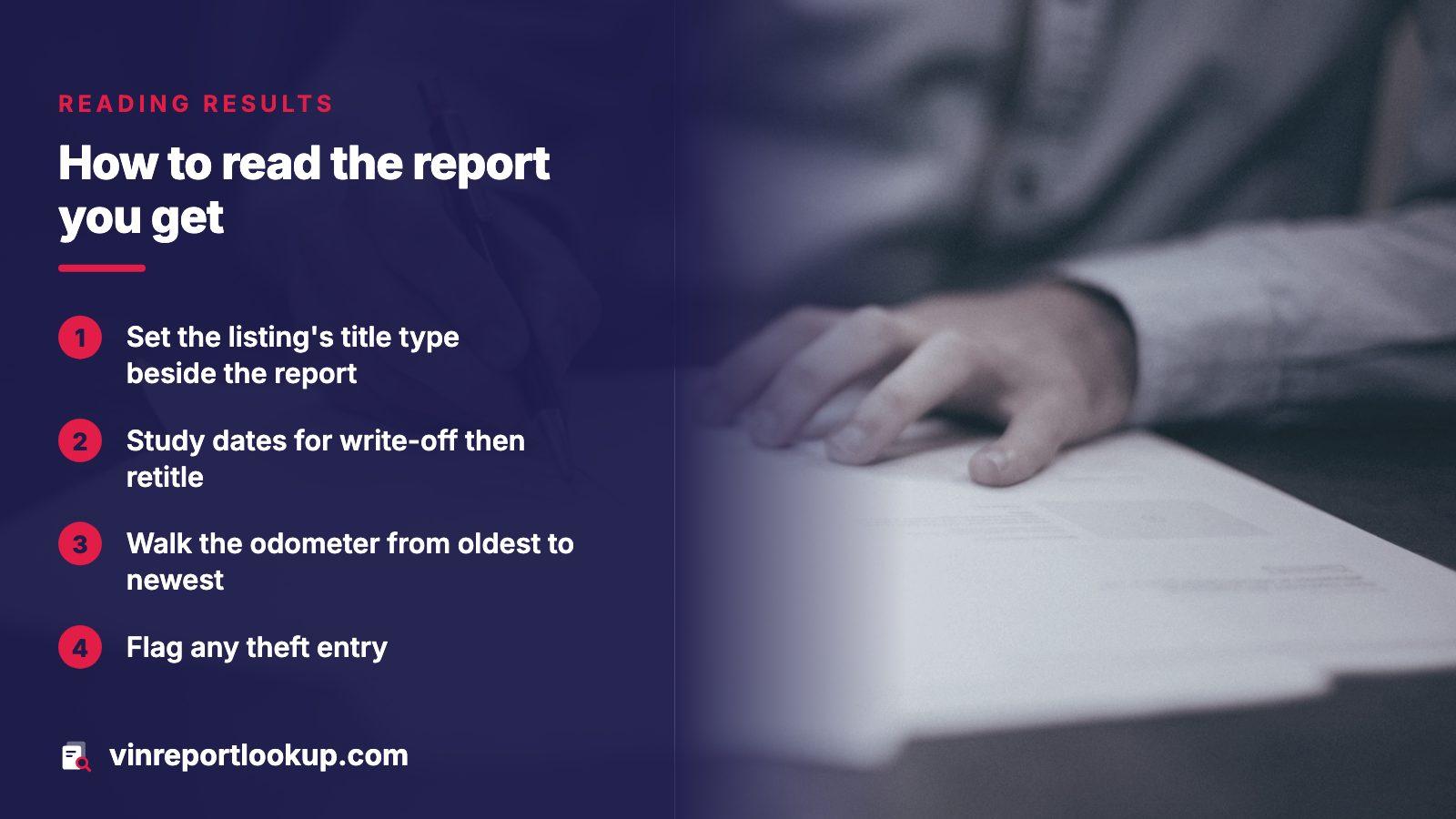
- Set the listing's title type beside the report. If the two differ, stop bidding instead of negotiating.
- Study the dates. A write-off, then a fast retitle elsewhere, can mean brand washing; the federal system never drops a brand after a state applies one.
- Walk the odometer line from oldest to newest. A drop or a long gap deserves a question.
- Flag any theft entry. Once a stolen car stays missing for 30 days, an insurer may call it lost; that label sticks even if it later surfaces undamaged.
- A spotless report proves little, since reporting is uneven across states and an empty result may be false.
The FTC cautions that no report replaces an independent inspection, and at an auction you may get only a walk around the yard. Let the report pick which car earns that walk.
What it costs here and what to do next
VINReportLookup shows a VIN preview first, with no payment, and you then buy the full report once. Nothing renews, and packs exist for people who check several lots. Current prices are listed on the pricing page; read them there, not in an article.
Before auction day, build a short list, run the insurer check on each VIN, buy the report for your top choice and note the title type, brand dates and mileage. Set a ceiling that already includes the repair estimate, the fees the operator charges and a margin for what the lot photos hide. Late payment carries penalties, so know the deadline before you win.
Where this information comes from
- IAA: auction rules — as-is terms, what listing notes mean, title and odometer disclaimers
- IAA: clear and salvage titles — title types, financing and rebuilt-title rules
- NICB: VINCheck — free insurer theft, salvage and flood lookup and its limits
- Department of Justice: NMVTIS for consumers — federal title data, gaps, brand washing, theft total losses
- FTC: buying a used car — history reports versus independent inspection
- NHTSA: warning on replacement air bag inflators — salvage and rebuilt car risk, advice to inspect
Sources and photos: Facts checked against the sources above in November 2026. Photos by Patrick von der Wehd, Scott Graham and Everett Pachmann on Unsplash; diagrams by VINReportLookup.
Keep reading
- Best VIN check: how to choose a report and what each one includesThe general comparison for any vehicle.
- Best VIN check for salvage cars: what a report must show before you buyA closer look at branded cars.
- Best VIN check for dealers: screening trade-ins and auction unitsFor buyers who source cars to resell.
- Carfax vs inspection: what each shows and which to buy firstWhat a report cannot replace on the lot.
Frequently asked questions
Can I run a VIN check on an auction car before I register to bid?
Yes. The VIN is shown on the lot listing, so you can run it through NICB's free check and preview it with a report seller without an auction account. Do this first, since registration and bidding come with fees and deadlines that you would rather not pay on a car that fails the check.
Does a clear title on the listing mean the car was never totaled?
Not always. The operator's rules warn that a car sold clear may still be reported as junk or salvage later, and a state can change a brand after your purchase. Confirm the title type with a history report before repairs, and pause on any disagreement.
Is the free NICB check enough for an auction car?
It works as a first screen, but it covers only insurance records from participating companies and skips police files. Even a clean result leaves room for a hidden history. Use it on every lot you like, then buy a full report for the cars you would really bid on.
Why would an auction car have a history report that looks thin?
Some states do not feed the federal title system, so a lookup may show nothing when something exists. A thin report on a damaged-looking car is itself a warning. Ask the seller for the title paperwork, check the state record the report links to, and pay for an inspection.
Should I check the VIN again after I win?
It rarely hurts. The title type has to be verified before repairs, and your state decides what a salvage car must pass to earn a rebuilt title. Run the VIN again when the paperwork arrives and compare it with what you saw before the sale. Any change in brand or odometer data is worth a question to the operator.
Now check the car itself
The guide explains what to look for. The report shows what this VIN has on record.