THE SHORT ANSWER
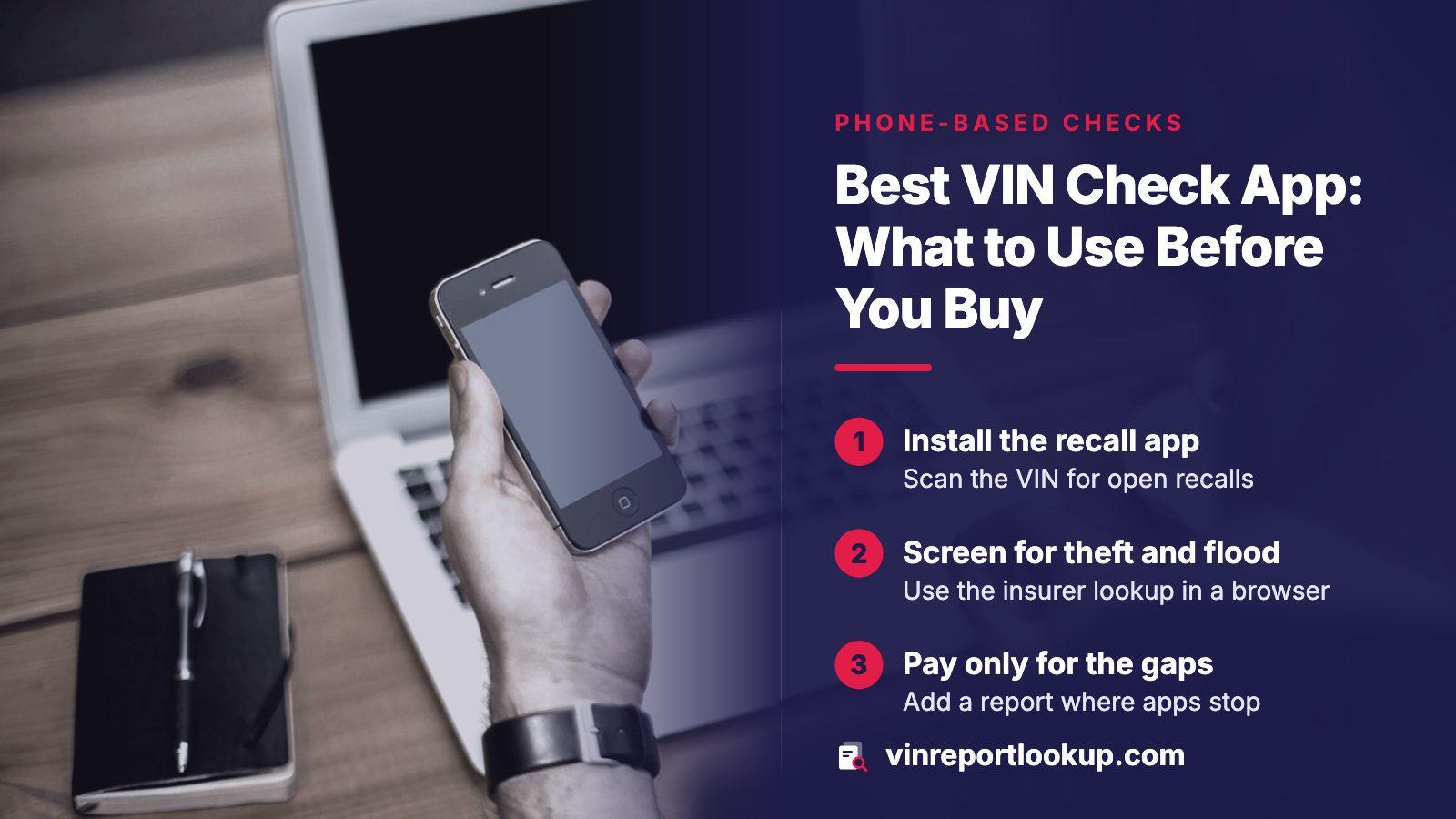
Install NHTSA's SaferCar app and scan the VIN for recall alerts. Open NICB's VINCheck in your phone browser to screen the same VIN for theft, salvage and flood flags from insurers. Neither shows title or odometer history. For that, run the VINReportLookup preview, which costs nothing, and buy one report if the car survives. Book a mechanic's look before any money changes hands.
- SaferCar app
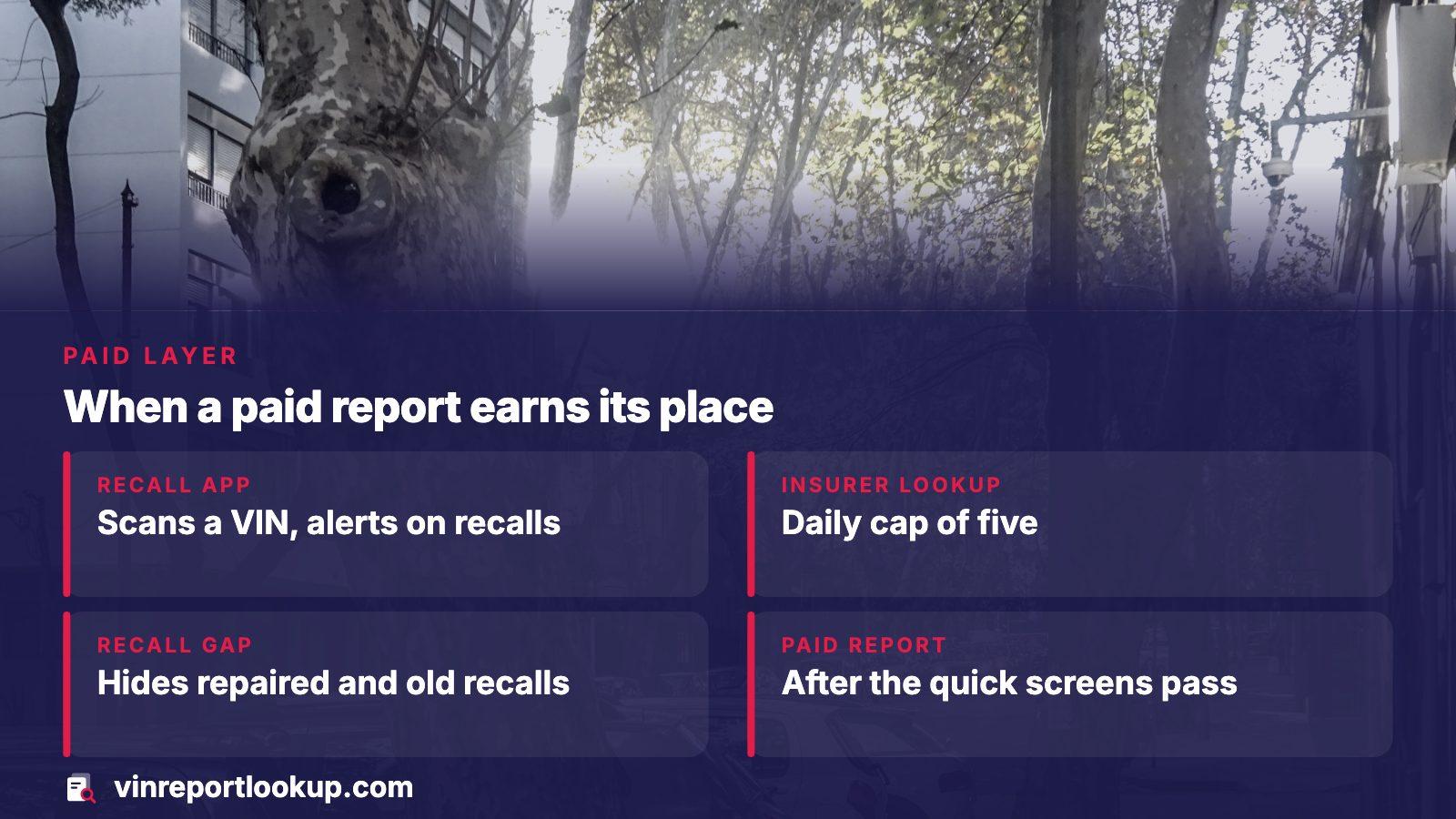
- Free; scans a VIN; alerts on recalls
- NICB VINCheck
- Daily cap of five per IP address
- Recall search gap
- Hides repaired and 15-year-old recalls
- VINReportLookup
- Free preview, one payment, no subscription
What you are really choosing when you pick a VIN app
Search results for this topic mix three different things under one word. Some are apps that read a VIN and show recall alerts. Some are websites that behave like apps on a phone. Others are paid report sellers with a mobile screen on top. They do not hold the same records, so ranking them on one scale gets you nowhere.
A better approach is to ask what you need to learn standing next to the car. Is it safe to drive today, was it ever stolen or written off by an insurer, or can the seller's odometer story be trusted? Each question has a different best tool, and the first two cost nothing.
SaferCar: the one real app worth installing first
NHTSA offers SaferCar for iPhone and Android at no charge. You install it, create a vehicle entry using either a typed or a scanned VIN, and optionally list the car seats, tires and gear you want monitored. When a recall turns up for anything on that list, the phone gets a notification.
It works as a virtual garage that holds as many cars as you like, and it can point you toward nearby dealers who do the repair. On privacy, the agency says your entries never reach its servers and stay on the handset. Safety ratings and the complaint form open from the same app.
A zero-recall screen has blind spots
According to NHTSA's recall page, a VIN lookup omits repaired campaigns, fresh announcements whose VIN lists are incomplete, campaigns older than fifteen years unless the maker keeps covering them, small builders, customer-service campaigns and imports from abroad. So a zero result speaks to repair status only. Crashes, floods and rolled-back odometers are outside its view.
NICB VINCheck: the quick screen for insurer-reported problems
VINCheck is run by the National Insurance Crime Bureau and lives on a website, not in an app store. Its entry field has a camera icon, so a phone can scan the VIN instead of you typing seventeen characters. The answer says if a member insurer reported the car missing and unrecovered, or logged it as a salvage or flood loss.
Two limits matter. Each IP address is held to five lookups a day, ample for one car and tight when you walk a dealer's whole row. And the records come only from participating insurers, who together account for 92.49% of U.S. earned premium, per NICB. A claim handled by an insurer outside the group never shows, and neither does damage nobody claimed.
NICB warns that a clear answer proves nothing and that this screen cannot stand in for a history report. Use it as a first filter.
Side by side: what each option can and cannot see
| Tool | Format | What it can show | Where it stops |
|---|---|---|---|
| SaferCar | Free app, iOS and Android | Open safety recalls for the VIN, with alerts | Repaired recalls, old recalls, any history event |
| Recall lookup on nhtsa.gov | Website | Unrepaired recall status; up to 100 VINs at once | Same gaps as the app, plus no history |
| NICB VINCheck | Website with camera scan | Insurer-reported theft, salvage and flood flags | Non-member insurers, unclaimed damage, titles |
| Paid history report | Website or vendor app | Title records, odometer data, damage and more | Cost; coverage differs by seller |
The NHTSA decoder is a fourth free source. It turns a VIN into factory details, and its notes warn that a blank field must not be read as a missing feature. It confirms the car is what the listing says, which is a different job from checking its past.
Where a paid report earns its place
NICB describes the gap itself. Its FAQ says a full report pulls from many more sources, including state title files, auction data and repair records, and that most carry a price. Over at the Justice Department's VehicleHistory.gov, the buying tips describe the federal title system as covering title, odometer and some damage history, with a cost of up to $4 a report.
The same site maintains the roster of companies cleared to supply that record, alphabetical and with no favorite. It also notes that Carfax, DMVDesk and Experian deal with dealerships only, so a consumer cannot get the federal record from them. When an app promises title data, ask which cleared provider feeds it.
- Pay when a car has passed the free screens and you are within days of making an offer.
- Pay when the seller will not show a title or the mileage looks low for the age.
- Save the money on any car you have already crossed off for price or a bad test drive.
A five-minute routine in the parking lot
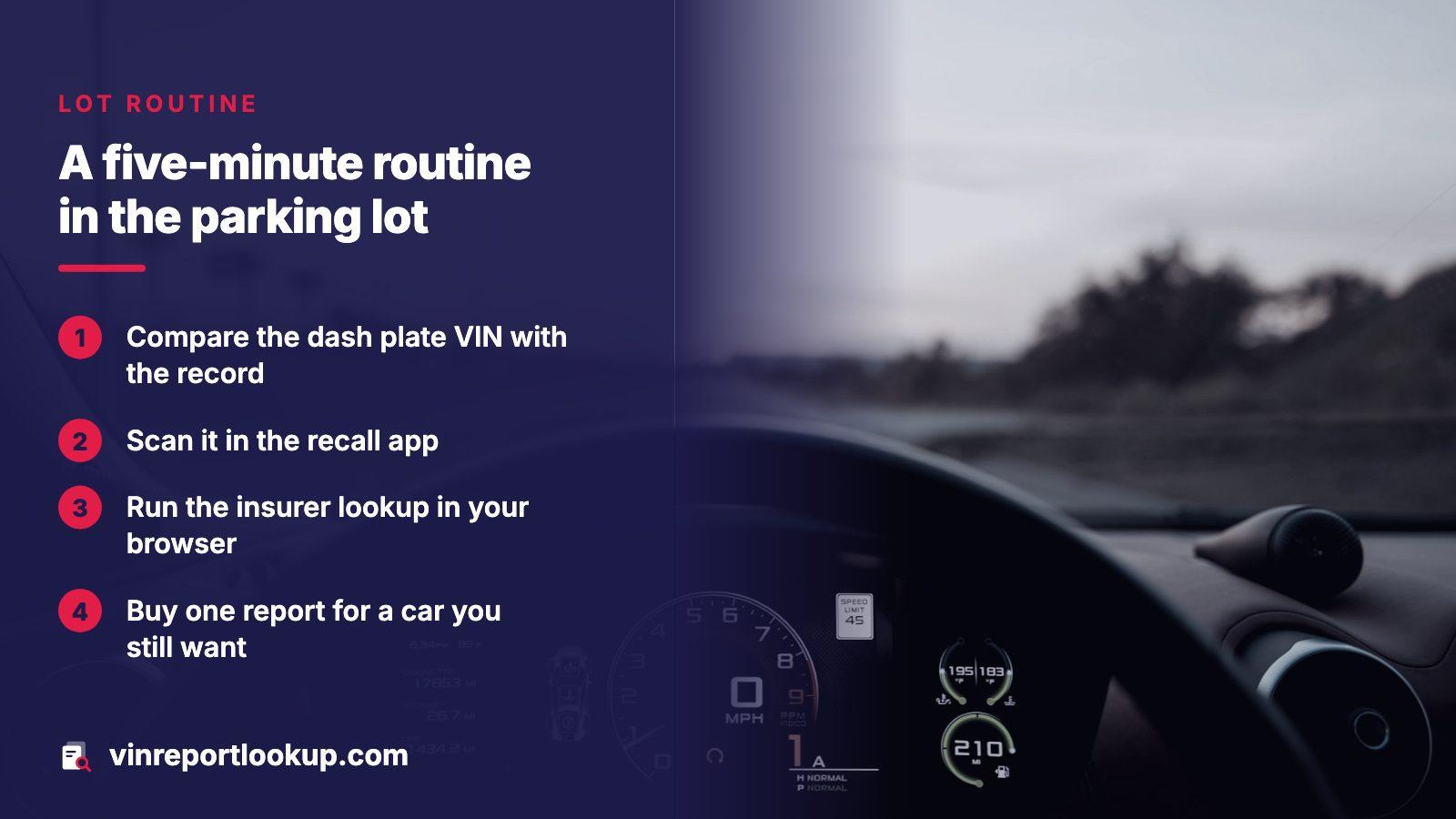
- Find the number on the dash plate and compare it with the registration and the seller's papers. If they disagree, leave.
- Scan or type it into SaferCar and note any open recall.
- Run it through NICB VINCheck from your browser and screenshot the result.
- If both look fine, preview the VIN on VINReportLookup and read the headline findings.
- Purchase one report, and only for a car you still want.
Typos cause more false all-clears than you might expect. NICB notes a mistyped number may match nothing at all, so check each character a second time.
Reading the results and spotting the red flags
A salvage or flood flag from the insurer screen is the strongest warning a free tool can give. In NICB's wording, salvage means the insurer wrote the car off as a total loss and paid out instead of repairing it. The car may be legally rebuilt and re-titled, but the history deserves close study before any money moves.
Open recalls are a different kind of finding. They usually lead to a no-cost dealer repair, so they are a bargaining chip and an errand, not grounds for leaving. A theft flag, or a seller who resists every question about the title, is a reason to walk.
Clean on free tools is not clean overall
Free screens miss accidents that never produced an insurance claim and do not show title brands or odometer readings. When a price looks too good, add an inspector's opinion to the report. The federal buying tips recommend an inspection, a federal title report and other sources, not any single one.
What a VINReportLookup check costs and what to do next
Put the VIN into the site and you see a preview at no charge. After that, a report is bought in one payment, as a single or in a bundle, and there is no subscription to cancel. The pricing page carries the current amounts, which is safer than a figure in an article.
The preview runs in any phone browser. You do not need to install anything to use it, which makes it easy to run beside the free screens while you stand at the car. To see the layout ahead of paying, open the sample report.
Where this information comes from
- NHTSA: SaferCar app — what the free app does, how to add a VIN, and its privacy statement
- NHTSA: Check for recalls — which recalls a VIN lookup lists and skips
- NICB: VINCheck lookup — insurer theft, salvage and flood screen, search limit and stated limits
- NHTSA vPIC: VIN decoder API — free decode of factory details from a VIN
- VehicleHistory.gov: Approved NMVTIS data providers — which companies are cleared to supply title data to the public
- VehicleHistory.gov: Used car buying tips — inspection advice and expected federal report cost
Sources and photos: Facts checked against the sources above in November 2026. Photos by Alejandro Escamilla, Dennis Eusebio and Nikolai Kolosov on Unsplash; diagrams by VINReportLookup.
Keep reading
- Best VIN check: how to choose a report and what each one includesRanks check options by the records each one holds, not by brand.
- Vehicle history report providers: who sells VIN reports and how they differThe companies behind reports and their data feeds.
- Sample vehicle history report: what to look for before you buy oneA finished report, section by section, ahead of purchase.
- Carfax vs inspection: what each shows and which to buy firstWhy a mechanic and a report answer different questions.
Frequently asked questions
Is there an official VIN check app?
NHTSA's SaferCar is the government's own app, and it is built around recalls. It accepts a typed or scanned VIN and alerts you when a recall appears. It does not report accidents, titles or mileage, so treat it as one input and pair it with an insurer screen and a history report.
Can I scan a VIN barcode with my phone?
Yes, in two places I opened. SaferCar accepts a scanned or typed VIN for a new vehicle, and NICB's entry field shows a camera icon. If a scan fails, NHTSA says the number also appears on the registration card and the lower-left corner of the windshield glass.
Do free VIN apps show accident history?
Not directly. NICB's screen reports theft, salvage and flood records that participating insurers filed, which catches some serious damage. Minor crashes handled without a claim, and anything outside those insurers, will not appear. A history report built on more sources fills part of that gap, never all of it.
What is the NICB lookup limit?
The limit is five lookups a day for each IP address, with no lifetime cap. With several cars on your list, test your favorites first and return tomorrow for the others.
Should I pay for a VIN report if the free checks are clean?
Usually yes, once you are serious about one car. Free checks cover recalls and insurer-reported events, not title brands or odometer readings. Preview the VIN first at no charge, then buy a single report only for the car you intend to purchase.
Now check the car itself
The guide explains what to look for. The report shows what this VIN has on record.