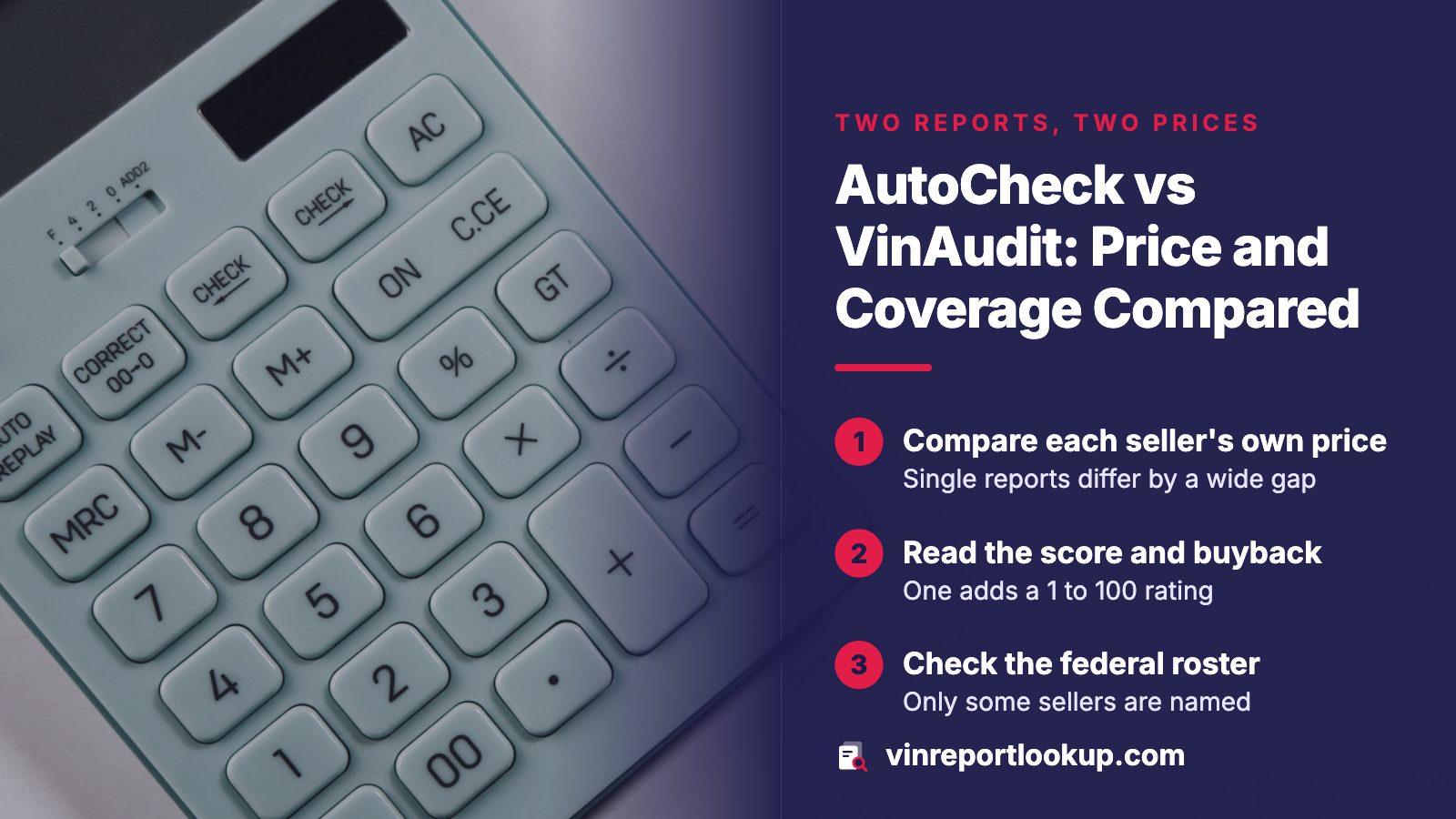
THE SHORT ANSWER
VinAudit is the cheaper route and is an approved federal title-record provider that serves consumers. AutoCheck costs about three times as much per single report, adds a 1 to 100 comparison score and a limited buyback promise, and says it draws on auction and dealer sources. For a shortlist, start cheap. For one expensive car, consider both, then pay a mechanic.
- AutoCheck single report
- $29.99, 21 days of updates
- VinAudit single report
- $9.99 on its own FAQ
- VinAudit refunds
- None once a report is delivered
- AutoCheck on the DOJ list
- Not named; Experian is commercial-only
Two different products behind similar names
Both companies will take a VIN and return a history. After that the designs diverge. VinAudit builds its report on the federal title system, then adds records from insurers, lenders and other partners. AutoCheck is an Experian product that describes itself as pulling from hundreds of sources, among them state motor vehicle departments, auctions and dealers.
A buyer comparing them is therefore not comparing two versions of one file. Each one can know something the other does not, and each admits it can miss events. That matters more than any feature list when you decide how many reports to pay for.
What each one charges, from their own pages
| AutoCheck | VinAudit | |
|---|---|---|
| One report | $29.99 | $9.99 |
| Bigger bundle | 5 reports for $59.99, within a 21 day window | 5 for $19.99, or 10 at $29.99 |
| Billing style | One-time fee, says no recurring charges | One-time purchase; separate subscription option exists |
| Access after buying | Dashboard view during the term, then locked until reactivated | Report delivered digitally to your member dashboard |
VinAudit's own FAQ adds that current pricing appears once records are found and the report is ready to buy, so treat its figures as what the page said when we read it. The same is true of AutoCheck. Prices change, and the order page is the final word.
What each report says it checks
AutoCheck's FAQ lists a search for salvage and junk status, hail, flood and fire damage, odometer problems, gray market imports, lemon buybacks, rental, taxi and fleet use, theft and liens. Accidents show up only when someone supplied them.
VinAudit's data page names title records, title brands, total losses, scrapping, salvage auction sales, open liens, impounds, exports and theft. Accident and sale sections print only when a match exists, which means a missing section is not a clean bill of health.
Neither names past owners
Both companies say their reports leave out the identity of earlier owners. If a seller's story depends on who owned the car before, ask for paperwork instead.
The Justice Department list, read carefully
The Justice Department publishes approved sellers of national title data. Vinaudit.com sits in the group that serves everyone, consumers included, and the page also lists VinCheck.Info as another site it owns.
AutoCheck does not appear by name. Experian.com is listed, but in the group limited to commercial customers. That is a fact about a published list. We could not confirm from these pages how AutoCheck's own consumer reports relate to it, and we are not drawing a conclusion either way.
Refunds, renewals and the buyback promise
VinAudit's terms treat a single purchase as final: once the report is delivered, the money is not returned. Its subscription option renews monthly until you cancel by form, with per-report fees on top, so a one-time buyer should avoid ticking that path by accident.
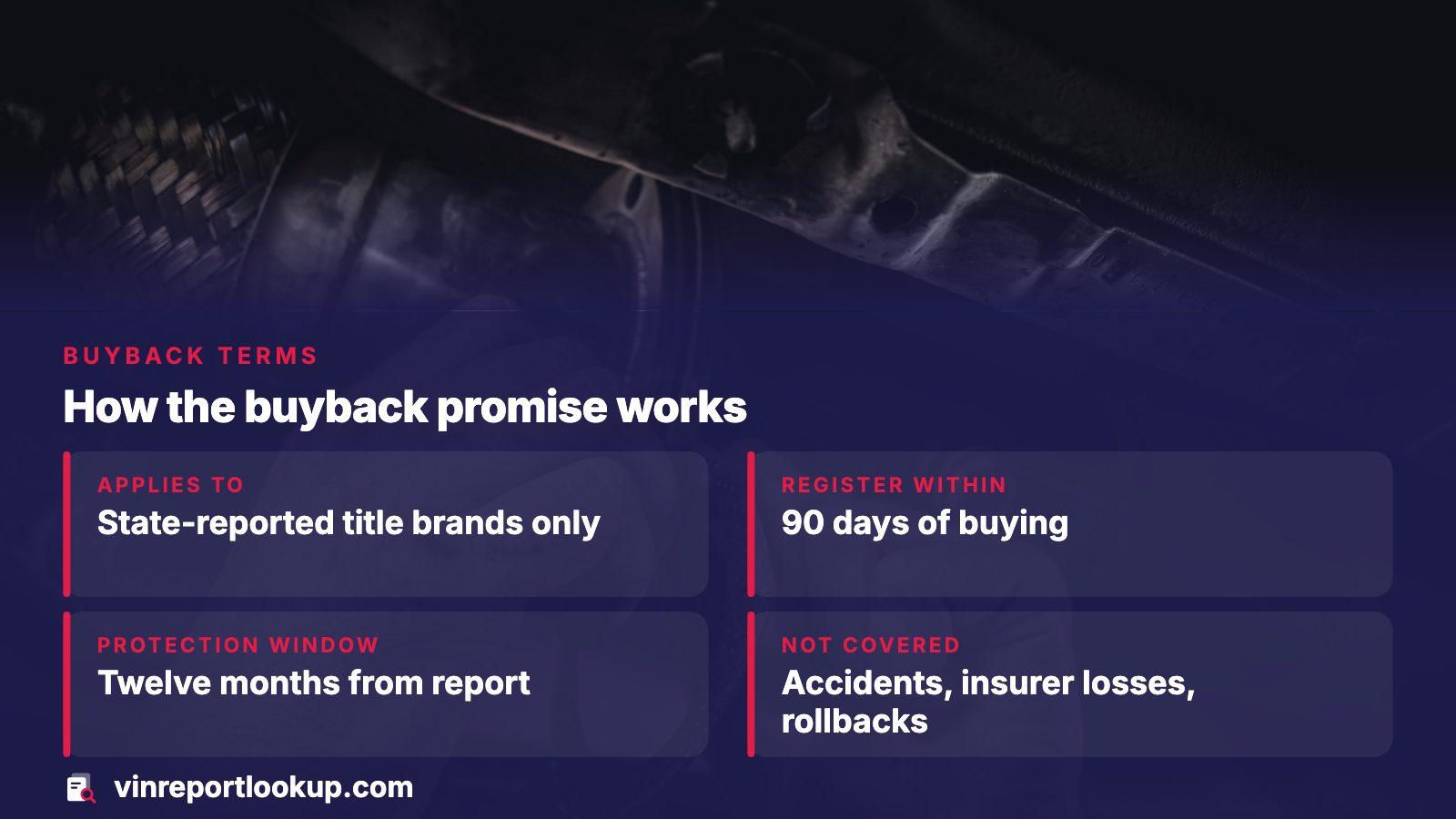
AutoCheck says its plan never rolls over on its own: your card is billed at purchase, or when you choose to extend. It also offers a buyback promise at no extra cost, with tight conditions:
- It applies only to a state-reported title brand that reached Experian before the report date and was missed.
- You must register the car within 90 days of buying it, signed in to an account.
- The protection window is twelve months, counted from the date on the report.
- Problems that only commercial feeds reported, such as accidents, insurer losses or rolled-back mileage, fall outside it.
- The payout tops out at 110% of a published retail figure, with a separate allowance of up to $500 for add-ons.
Which to buy for which situation
- Checking five or six listings before visiting any: the cheap report, so the money goes toward the car.
- One finalist with a high price: both reports, since their sources differ, then an inspection.
- A private sale with a thin paper trail: a title-focused report, because brands and total losses decide that deal.
- A dealer car where you want a quick relative rating: AutoCheck's score gives you one, though its own page frames the score as a prediction about staying on the road, not a verdict on this car.
The Justice Department's consumer page makes the broader point: its title report is deliberately short, a clean one is good news but no guarantee, and state branding rules differ. Its FAQ also suggests an independent inspection before you buy.
Where a one-time report from this site fits
VINReportLookup is a third route. Enter the VIN, read the free preview, and decide whether to pay. If you do, it is a single payment for one report, or a pack if you are comparing several cars, with no subscription. Current prices sit on the pricing page, not here.
The full report is aimed at the questions that sink a purchase: title brands, damage and salvage records, odometer readings, liens and theft. Run the preview on every serious candidate, then spend more only on the cars that survive.
A short checklist before paying anyone
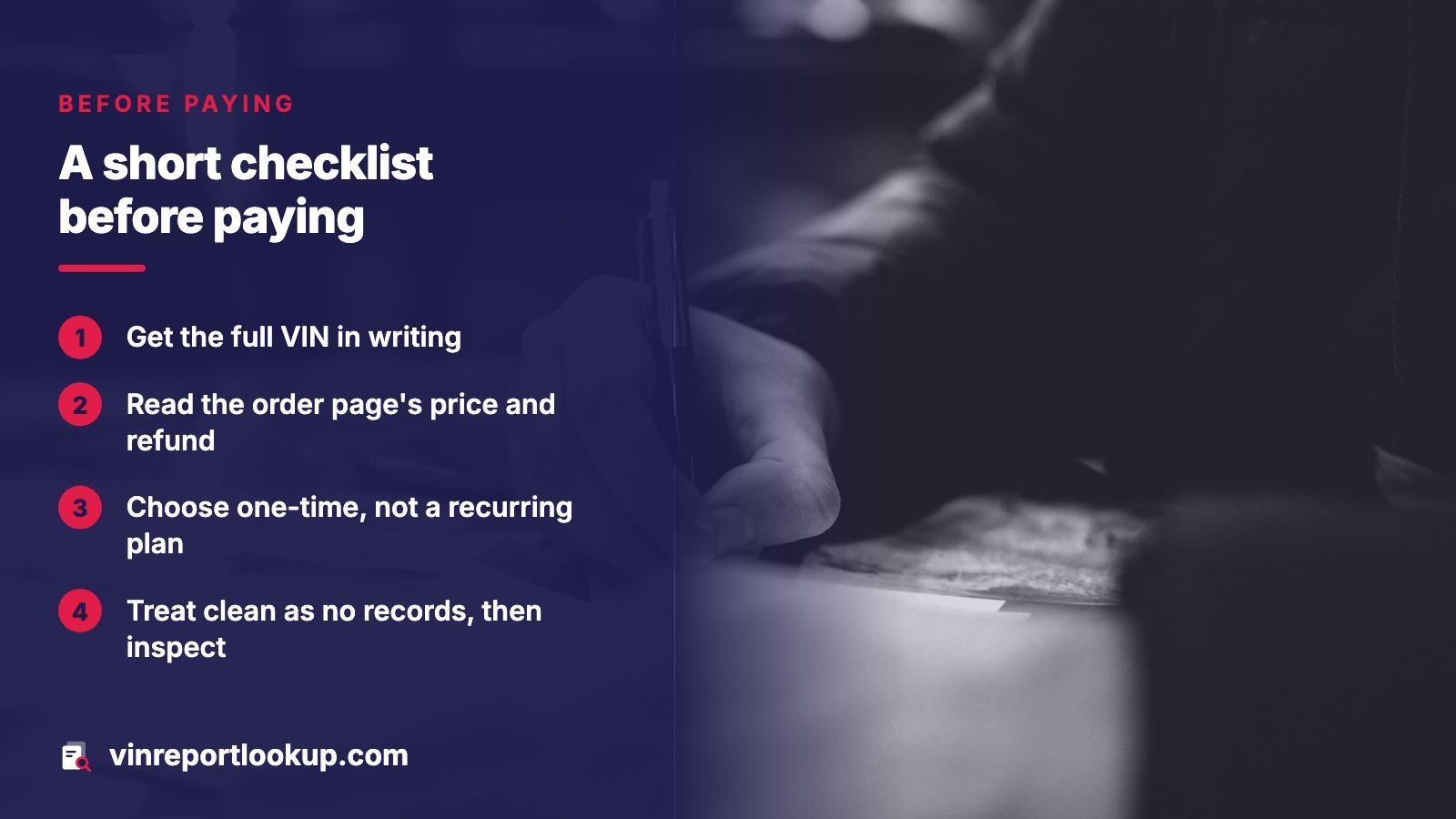
- Get the full 17-character VIN from the seller in writing, and compare it with the car and its title.
- Read the order page for the exact price, term and refund wording that day.
- Make sure you chose a one-time purchase, not a recurring plan.
- Treat a clean report as the absence of records, then inspect the car.
VinAudit's page carries a warning about unauthorized sites selling its reports, so type the address yourself instead of following an ad.
Where this information comes from
- AutoCheck: order vehicle history reports — Source for the listed single and five-report plans and the one-time fee wording.
- AutoCheck: vehicle buyback protection — Source for the buyback conditions, exclusions and payout cap.
- VinAudit: vehicle history check — Source for its listed prices, free-summary step, FAQ answers and scam banner.
- VinAudit: terms and conditions — Source for the refund rule and the subscription billing terms.
- Justice Department: approved NMVTIS data providers — Source for which names serve consumers and which serve only commercial customers.
- Justice Department: NMVTIS consumer page — Source for the limits of a concise title report and varying state brand rules.
Sources and photos: Facts checked against the sources above in November 2026. Photos by Sasun Bughdaryan, Owen Michael Grech and Martin Fennema on Unsplash; diagrams by VINReportLookup.
Keep reading
- AutoCheck alternatives: other VIN reports, and what each one showsOther report options if neither of these two fits your budget.
- VinAudit alternatives: what else you can buy, and what each report holdsWhat else is on the market beside the cheaper of the two.
- Carfax vs VinAudit: six steps to pick the report you pay forThe same cheap report weighed against the best-known name.
- AutoCheck vs NMVTIS: pick the report that matches your riskHow AutoCheck compares with the federal title record on its own.
Frequently asked questions
Is VinAudit cheaper than AutoCheck?
On the pages we read, yes. VinAudit's FAQ lists one report at $9.99, with bundles of five at $19.99 or ten at $29.99. AutoCheck's order page lists one report at $29.99 and five for $59.99. Both can change, so check each order page before you pay.
Does AutoCheck or VinAudit renew automatically?
AutoCheck says nothing rolls over on its own and you are billed only when you choose to buy or extend. VinAudit's one-time purchase is a single payment, but its separate subscription option renews monthly until canceled by form. Pick the single-report path if you only need one car checked.
Can I get a refund from either service?
VinAudit's terms rule out refunds after a report has been delivered. We did not find a general refund promise on the AutoCheck pages we read. Its buyback program is a separate, narrow promise about missed state title brands, so contact support before buying if refunds matter to you.
Do these reports show who owned the car?
No. AutoCheck says it does not give names or details of previous owners. VinAudit says a lookup does not typically reveal them either. You can see title dates, states and mileage, but not people. Ask the seller for the title and service paperwork.
Should I buy both reports for one car?
On an expensive car, it can make sense, because each service draws on different sources and can miss events the other holds. For a cheap car or a long shortlist, one report plus a free preview and a mechanic's inspection usually does more for the money.
Now check the car itself
The guide explains what to look for. The report shows what this VIN has on record.