THE SHORT ANSWER
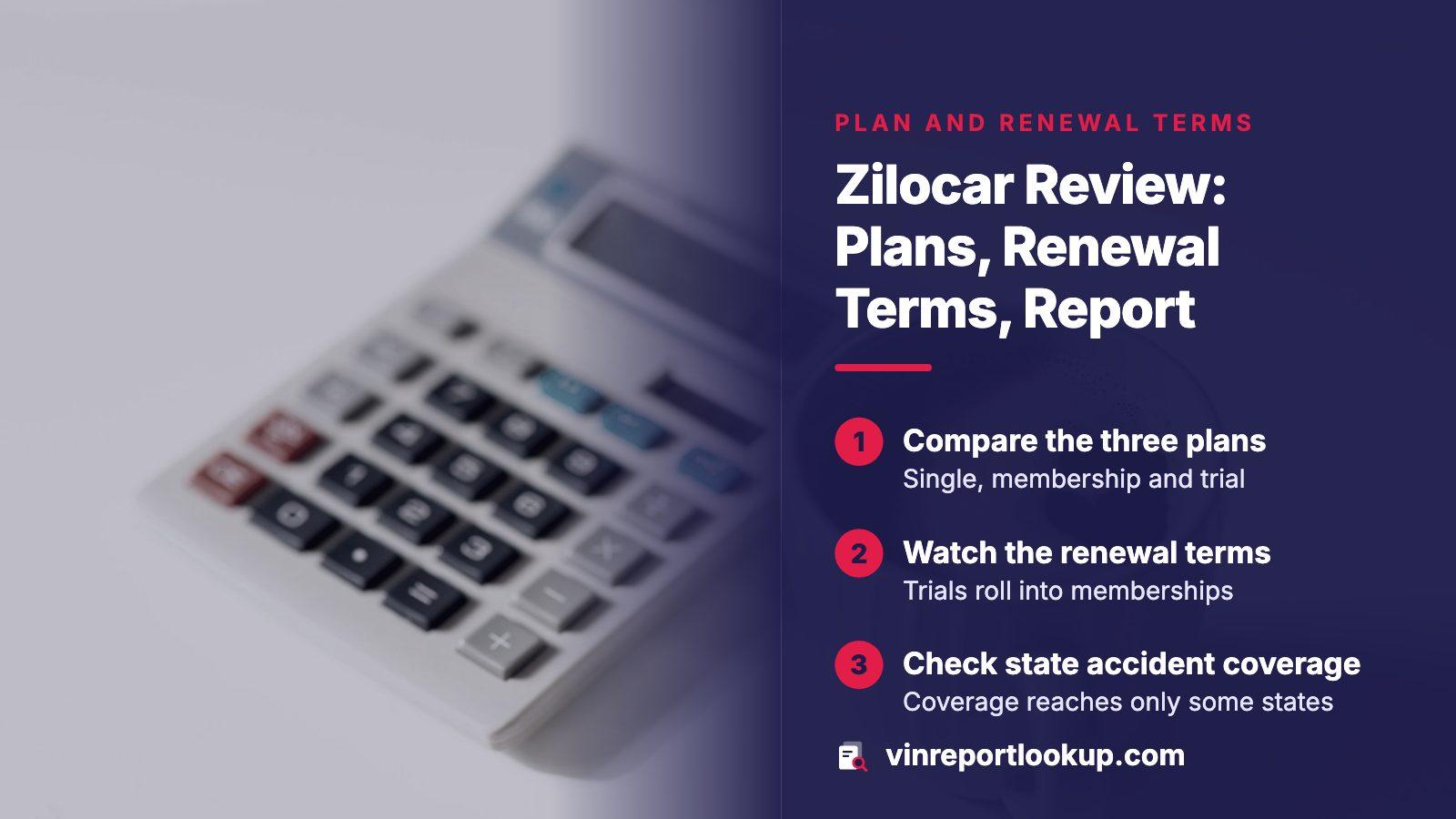
Zilocar offers a one-time single report at $39.95, a membership that opens at $29.50 and afterward costs $59.75 monthly, and a $1.95 three-day trial that rolls into the membership. Refunds are narrow and renewals come without a reminder. Its report lists title, salvage, odometer and accident sections, but accident coverage reaches only some states. Buy the single report if you buy at all, and cancel anything recurring the same day.
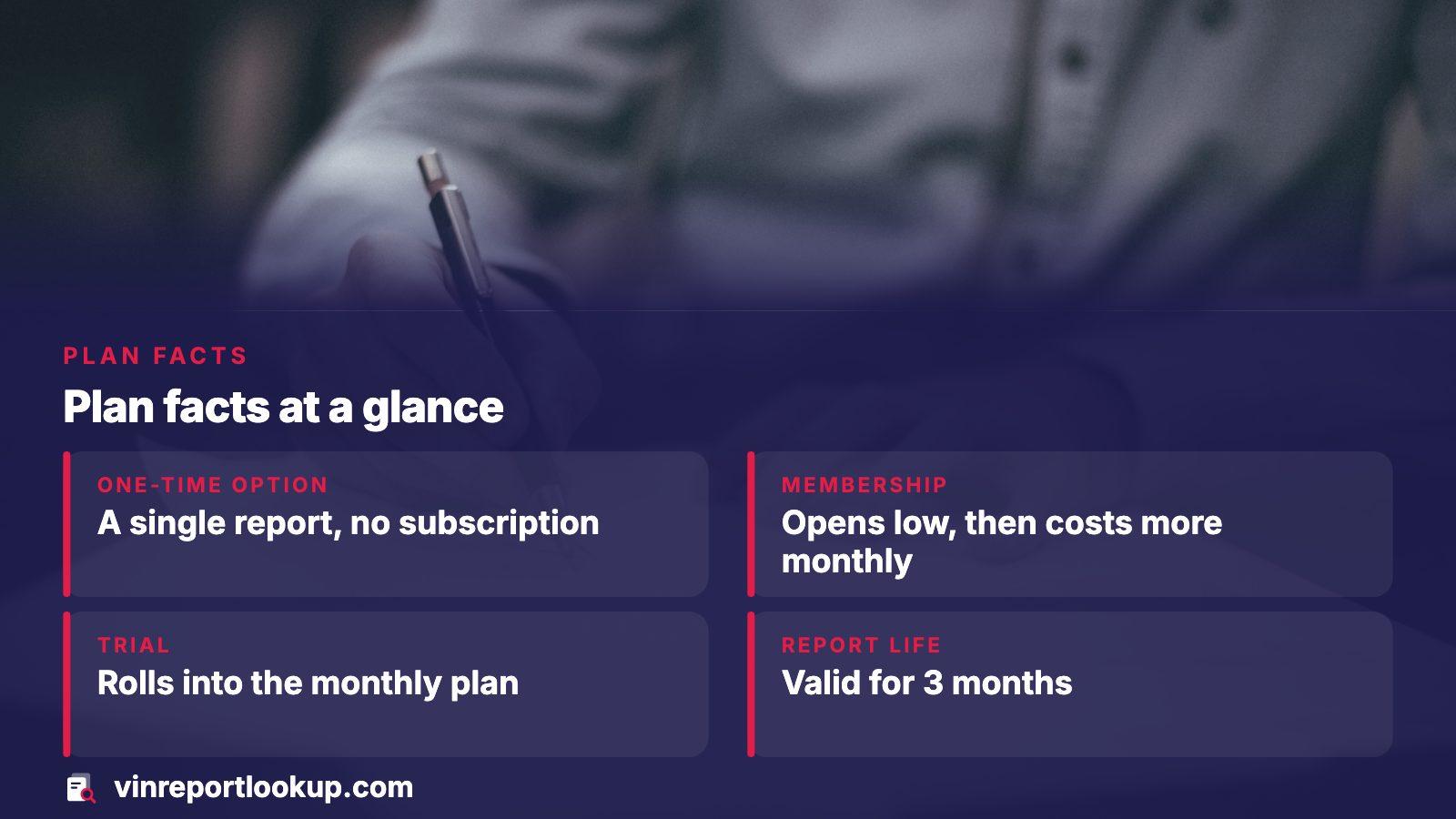
- One-time option
- Single report at $39.95, no subscription
- Membership
- Opens at $29.50, then $59.75 per month, 20 reports
- Trial
- $1.95 trial that rolls into the monthly plan
- Report life
- Valid for 3 months after it is generated
What Zilocar is and how this review was put together
Zilocar is a site where you type a VIN, see a free pre-check summary, and pay to open the full report. The company says the report arrives by email, usually within 5 minutes, and also sits in an account dashboard that is created at checkout.
Everything about Zilocar below comes from pages it publishes: the FAQ, the refund policy, the terms and a sample report. Anything about federal records comes from the Justice Department, NICB or NHTSA. We did not run a paid Zilocar report for this page, so nothing here describes how accurate a particular result turned out to be.
The three ways Zilocar charges you
The plan names matter more than the prices, because only one of them is a single purchase. Zilocar's own documents describe them like this.
| Plan | What you pay | What happens next |
|---|---|---|
| Premium Single Report | $39.95 once | One VIN, no subscription |
| Premium Membership | Opening month at $29.50 | Afterward $59.75 every month, with 20 reports |
| Premium 3-Day Trial | $1.95 up front | Covers 72 hours and 3 reports, then the $59.75 monthly plan starts |
Zilocar says checkout shows the plan, the introductory price and the renewal terms, and that you must accept them to pay. That is worth reading slowly, because the headline number on the button is the introductory one.
Renewal and refunds are where buyers get caught
Memberships renew on their own each month at the regular rate. Zilocar states in its FAQ that it sends no advance billing notice, so the date you need is in the dashboard under Billing. Receipts arrive after each successful payment, which is after the money has moved.
The refund policy is short. A charge is considered for return only when the same VIN was billed twice or the report came out blank because of a technical fault. It lists what does not qualify: a clean report, missing data outside its control, a mistyped VIN, a missed cancellation and going beyond the monthly allowance of 20 reports.
Trial fee
Zilocar will not return the $1.95 trial fee, even when you cancel within the 72 hours. Cancelling on time only blocks the switch to the monthly plan. Reports you already ran stay yours.
What the report is built to show
Zilocar's FAQ and its sample report describe a document organized around the questions a used-car buyer asks first. The sample, a masked 2020 Subaru Forester, opens with a box of the highest-priority items, then a grid where every check gets a status of clear, needs review or found.
- Title brand checks, listing separate entries such as salvage, rebuilt, flood, hail and lemon, each marked found or not found.
- Junk and salvage records tied to a named entity and a date.
- Accident and damage entries with the impact area, whether the airbags were intact and whether the car could be driven.
- Odometer readings and a rollback warning line.
- Sales listings, owner count, usage type, loan and lien records and market value ranges.
The membership description adds service history, emissions records and repair cost estimates. The single report is described as having the same premium features.
Where the data comes from, and what stays unconfirmed
Zilocar says it draws on state DMVs, insurers, salvage yards and similar public sources, plus proprietary databases for recalls, liens, sales and values. It also states that it does not edit records, so a wrong entry has to be fixed with whoever originally reported it.
The federal title record is a separate question. The Justice Department publishes a roster of firms cleared to sell NMVTIS reports to consumers, and the name Zilocar was absent when we read it. Zilocar's own pages do not claim NMVTIS data either. That does not prove its title section is weak, since a company can license data indirectly, but we could not confirm the link in either direction.
Gaps the company itself admits to
Zilocar is candid that a report cannot see everything. Its accident feed reaches only up to 38 states, so a car that lived elsewhere may show less than you expect. A vehicle used only in Canada may return thin records or none, and a repair paid for privately never reaches a database at all.
Its FAQ goes one step further and tells buyers to back the report with a hands-on inspection and the car's maintenance paperwork. Take that advice seriously. A clear line on the sample page means no matching record was reported, which is a narrower statement than saying nothing happened.
Reading a quiet report
Little data is not automatically good news. Hold the report up against the seller's story about owners and mileage. A conflict between the two is a cue to press for answers.
What to make of the testimonials
Zilocar's homepage and reviews page carry a large block of glowing customer comments and a star rating, and the reviews page says they come from a public Trustpilot profile. Those pages are published by the company. We did not verify them independently, and we have not quoted them as evidence either way.
The more useful signal is the structure of the company's own paperwork: the terms are posted, the refund conditions are specific, and the FAQ admits coverage limits. Judge it on those, and on what you see in the free pre-check summary before you pay.
Run the no-cost lookups first
Two free tools cover part of the same ground. NICB's VINCheck matches a VIN against theft, salvage and flood entries filed by member insurers, and caps you at five searches a day from one connection. NICB itself warns that it falls short of a complete history.
NHTSA's VIN recall tool reports open, unrepaired campaigns and nothing else. It leaves out repaired ones, recalls older than 15 years in most cases and some very recent announcements. If both come back clean and the car still looks right, you have narrowed what a paid report must answer.
If you decide to buy a report from us instead
This site follows a simpler model. You enter a 17-character VIN, look at the free preview, and pay one time for the report you want. Nothing renews, so there is no billing date to remember. Our pricing page lists the current amounts, and a sample report is posted so you can see the layout first.
Titles, damage, mileage and salvage history are the parts that matter most here. As with any history report, it reflects only what was filed, so a pre-purchase inspection still comes last.
Verdict
Zilocar looks like a working report seller with unusually detailed posted terms. The sample is organized well, and the stated coverage limits are honest. The risk is the payment design: two of the three offers end in a $59.75 monthly charge, with no warning email beforehand and almost no way back.
If you try it, choose the single report, set a calendar alert, and screenshot checkout. Run the free recall and theft lookups first, ask the seller for service records, and book an inspection before you pay for the car.

Where this information comes from
- Zilocar: FAQs — Plans, renewal, report validity, data sources and coverage limits as the company states them.
- Zilocar: refund policy — The trial terms and the short list of refundable and non-refundable cases.
- Zilocar: sample vehicle history report — The layout, check grid and caveats of a masked example report.
- Justice Department: approved NMVTIS data providers — The federal list checked for the name Zilocar.
- Justice Department: NMVTIS for consumers — What the federal title system covers and why a search can miss records.
- NICB: VINCheck — The free theft, salvage and flood lookup and its limits.
- NHTSA: check for recalls — What a VIN recall search does and does not show.
Sources and photos: Facts checked against the sources above in November 2026. Photos by Ben Wicks, Alejandro Escamilla and Scott Graham on Unsplash; diagrams by VINReportLookup.
Keep reading
- Car history report subscription: when a plan pays and when to skip itHow recurring plans work and how to avoid paying for months you did not want.
- Vehicle history report providers: who sells VIN reports and how they differThe wider field of report sellers and how they differ.
- Sample reportSee the layout of a report from this site before paying.
- Best VIN check: how to choose a report and what each one includesA way to choose a check by the question you still need answered.
Frequently asked questions
Does Zilocar charge a subscription?
Only if you pick the membership or the trial. The single report is a one-time purchase according to its FAQ. The trial and membership renew monthly at the regular rate unless you cancel in the dashboard before the next billing date.
Can I get my money back from Zilocar?
Its policy considers a refund only for a duplicate charge on the same VIN or a blank report caused by a fault. A clean report, a wrong VIN or a missed cancellation do not qualify, and the $1.95 trial fee is never returned.
How long can I keep a Zilocar report?
A report is good for 3 months after the day Zilocar generates it. After that it expires and the company suggests running a new one. Saving a PDF copy is the way to keep the original details for your records.
Is Zilocar an approved NMVTIS provider?
The Justice Department list we read did not include Zilocar, and its own pages do not claim NMVTIS data. We could not confirm whether it licenses that data through another company, so ask support directly if the federal title record matters to you.
Will a Zilocar report show every accident?
No. The company says accident data covers up to 38 states and that unreported or privately repaired damage will not appear. Treat a clear result as no record found, then verify with an inspection by a mechanic you trust.
Now check the car itself
The guide explains what to look for. The report shows what this VIN has on record.