THE SHORT ANSWER
Stat VIN is mainly a bidding and import service for auction vehicles, and its lookup shows what happened to a car at those auctions. Its own terms say the vehicle data is unverified and that buyers must inspect the car. It is not a title-brand, odometer or theft report, so pair it with a separate VIN report before you bid.
- What it is
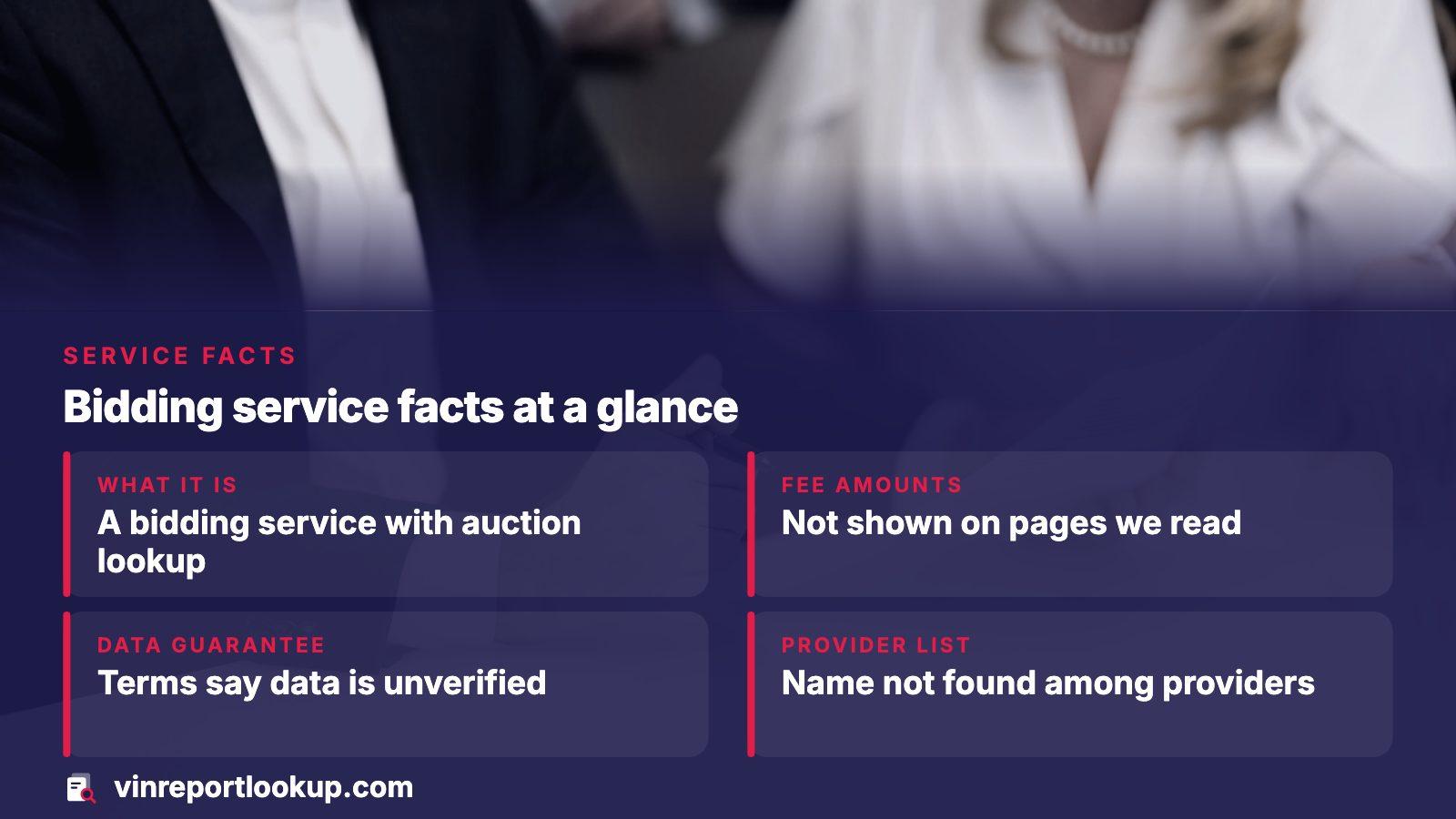
- A bidding service for Copart and IAAI cars, with an auction lookup
- Fee amounts
- Not shown on the pages we read
- Data guarantee
- Terms say vehicle information is not verified
- Federal provider list
- Name not found among approved NMVTIS providers
What Stat VIN actually sells
Open the home page and the first thing you meet is a car search, not a report order form. Its listings are used and salvage cars drawn from two big online auction houses, Copart and IAAI, covering the United States and Canada, and members place bids through the company. Around that sit a short questionnaire that matches you with lots, a watchlist with maximum-bid alerts, and a delivery calculator.
The VIN lookup is one more tool in that set. The page describes it as showing bidding and sales history from the two auction houses, with details such as damage, mileage, keys and gearbox. Its page description calls that check free. We could not read anything that names who supplies the data.
How we handled access
Our plain requests to the site were blocked, so every Stat VIN fact here comes from pages the fetch tool opened. Nothing comes from review sites, forums or copies of the pages.
What the lookup can and cannot tell you
An auction history answers a narrow question: did this car pass through a salvage auction, and what did the lot listing say about it. That is worth knowing, because a car that sold at auction after a collision, flood or theft recovery has a story the seller may skip.
It does not answer the questions a title clerk would ask. A lot listing is not a state title brand, an odometer series across years, a lien search or a theft record. The auction lookup only sees the car while it was in the auction pipeline, so a vehicle that was damaged and repaired privately never appears.
| Question a buyer has | Auction lookup | Title-based VIN report |
|---|---|---|
| Was it sold at a salvage auction | Yes, if the lot is in its data | Often, through salvage and insurer records |
| Does the state hold a brand on the title | Not stated on the pages we read | Yes, where the state reports |
| Odometer readings over the years | Mileage at auction only | Readings from several record types |
| Open liens or theft | Not described | Covered by some reports |
The deposit and how bidding works
The how-it-works page lays out a refundable deposit before you may bid, which it says the auction houses themselves require. Viewing lots needs no account, while registering takes about five minutes and adds the watchlist and final prices of finished auctions.
- Put down up to 2,000 dollars and you may bid as high as 20,000 dollars, spread across no more than 3 lots at the same moment.
- Beyond that, the deposit is 10 percent of whatever limit you want, with every 600 dollars backing one simultaneous lot.
- If you win, the deposit is held until you pay; if you lose, it is released or can be withdrawn.
- The pre-bid stage lasts several days and starts at zero, then the live stage starts from the top pre-bid.
The page says there are no extra fees for taking part in auctions but states no commission amounts, only a calculator. We therefore cannot tell you the total cost of a car bought through it.
What the terms say about accuracy
Read this part before you bid. The terms and conditions say vehicles are sold as-is and where-is, and that vehicle information comes from sellers. Neither Stat VIN, the dealers nor Copart verifies it or guarantees it is complete, and none of them inspects the cars.
Reports from outside VIN services get the same treatment: unverified. The inspection falls to you, either in person or through someone you hire. The separate terms of service add that the company does not promise results of use will be accurate.
Reading that plainly
The service shows you the lot and the auction trail. The terms put the job of checking the car on you, which is the reason to run an independent report first.
Refunds, cancelling and fees we could not pin down
Several answers a buyer would want are missing from the pages we opened. No membership fee figure is printed; the terms send you to a rules section and a help-center page for numbers. Nothing lays out a refund policy, and the agreement lets the company or its dealers decline a refund for any reason.
Closing an account gets no step-by-step process in the terms. They only warn that doing so is at your own risk, with earlier bids, purchases and payments still your responsibility. Beyond that, the terms mention charges for auctions, storage, late payment and relisting.
Title paperwork carries its own timing. Per the terms, getting a title processed can run 5 to 7 weeks and may cost extra, while shipping abroad a car on a junk-type title brings a separate fee and roughly 2 to 6 more weeks.
What the federal title system adds
The Justice Department runs the national title information system and publishes a list of approved providers that sell its reports to the public. We looked on that page for Stat VIN, Copart and IAAI and found none of the names. That does not prove anything about their data, only that the federal title records are not something you can assume sit behind the lookup.
The department's consumer page matters here. Once any state applies a brand like salvage, junk or flood, it remains in the national record. Roughly 87 percent of vehicles are represented there. Just over half the states send data in, so a search can come back clean when it should not. States also brand damage differently, and a car an insurer wrote off as a total loss may not have been scrapped at all.
For a car that already went through an auction, that matters twice. The auction lot may show the damage, and the title may or may not carry the brand.
A short routine before you bid on any auction car
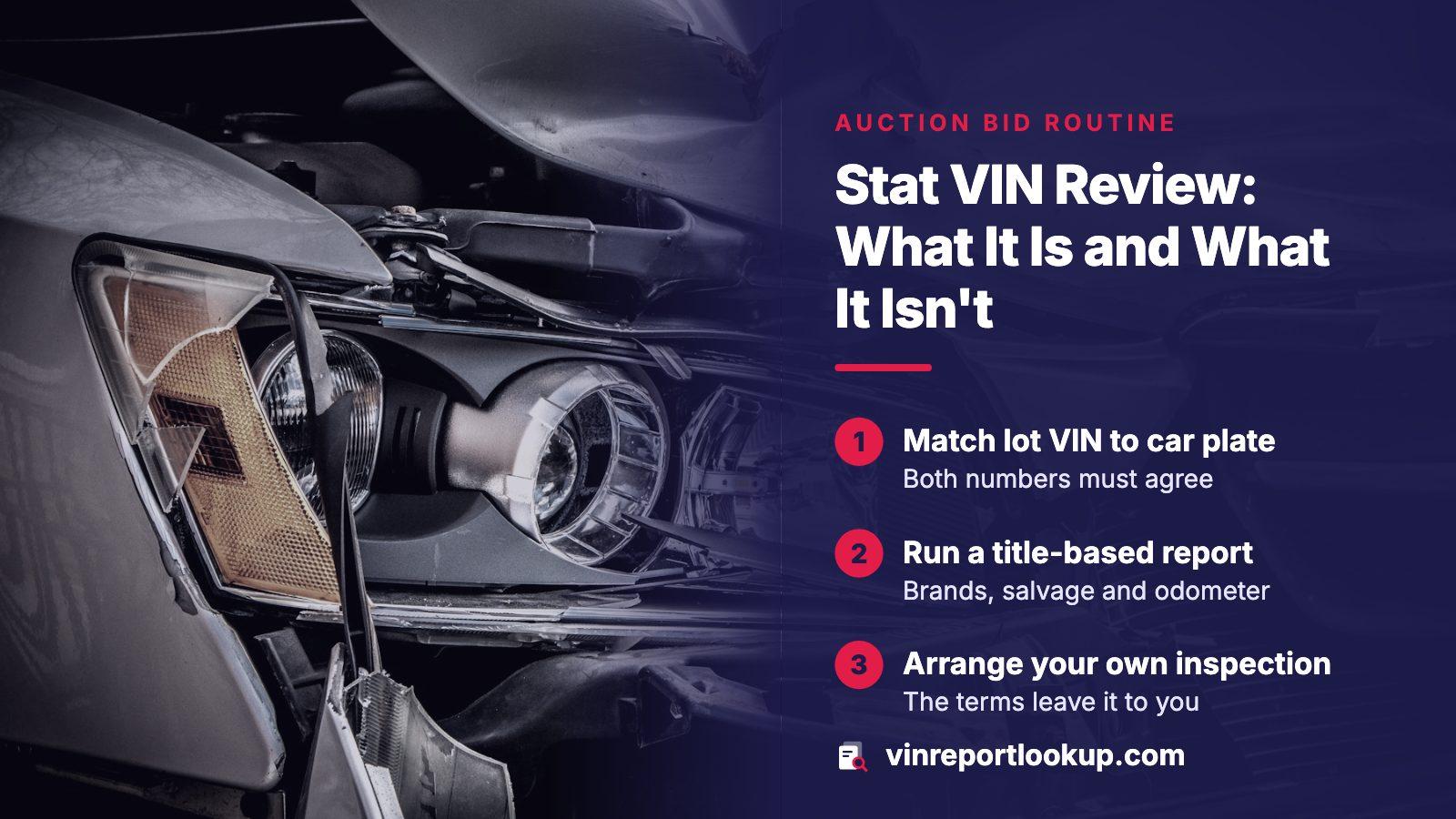
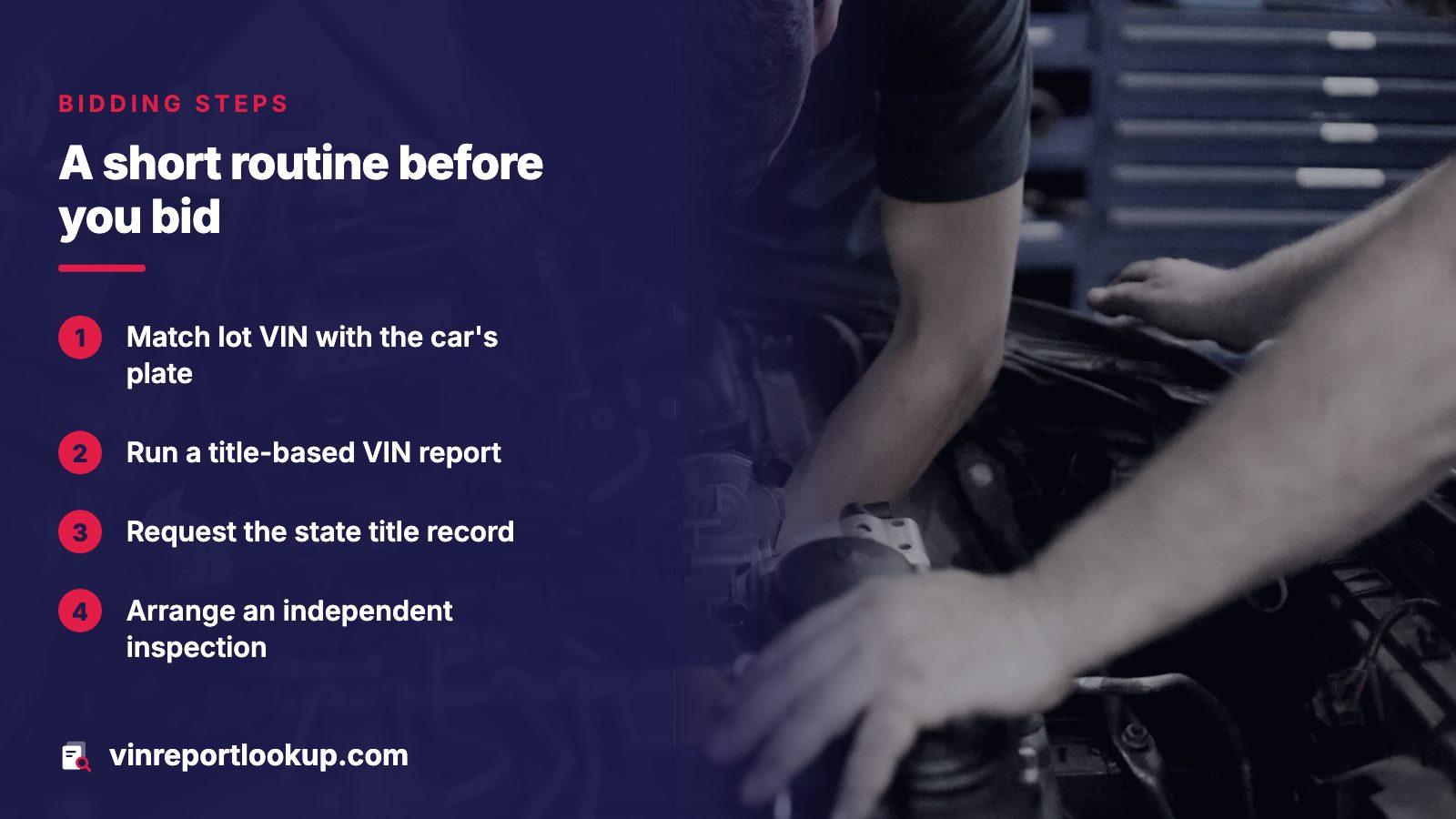
- Copy the VIN from the lot listing and from the car's own plate, and confirm they match.
- Run a title-based VIN report and read the brand, salvage and odometer entries.
- Request the state title record, as the Justice Department recommends, if the car's status is unclear.
- Check how the car you want would be titled in your own state, since the terms say title status can change on registration and some cars cannot be registered.
- Arrange an independent inspection, because the terms leave it to you.
Our own preview shows you the match for a VIN before you pay, and the report is a single purchase. See the pricing page for the packs, then use the report as the cross-check on whatever the auction lot says.
Who it suits and who should look elsewhere
If you are an experienced buyer who wants access to Copart and IAAI lots and is comfortable with import paperwork, a bidding service can fill a real gap. Read the membership and deposit rules first, and expect to do your own due diligence.
If you simply want to know whether a car on a dealer lot or in a private ad has a hidden past, a bidding portal is the wrong tool. A VIN report built around title and insurer records answers that directly, and the pages on salvage and auction cars below cover how to choose one.
Where this information comes from
- Stat.vin: how it works before purchase — Deposit rules, bidding stages and the statement on fees.
- Stat.vin: Terms and Conditions — As-is sale, unverified vehicle data, refunds, cancelling and title timing.
- Stat.vin: Terms of Service — Accuracy disclaimer for results of use.
- Justice Department: NMVTIS for consumers — Coverage, brands, false negatives and the state title record.
- Justice Department: approved NMVTIS data providers — The roster we checked for the service's name.
Sources and photos: Facts checked against the sources above in November 2026. Photos by Clark Van Der Beken, Mustafa Sheikhmouss and Carrie Allen www.carrieallen.com on Unsplash; diagrams by VINReportLookup.
Keep reading
- Best VIN check for auction cars: what to run before you bidHow to pick a check when the car came through an auction.
- Best VIN check for salvage cars: what a report must show before you buyWhat to look for when a salvage or rebuilt brand is possible.
- Bidfax review: what we could confirm and what to use for a VIN report insteadAnother auction-history name, read the same way.
- Sample reportSee the layout of a report before you decide to pay.
Frequently asked questions
Is Stat VIN a vehicle history report?
Not in the usual sense. Its pages describe a bidding service for Copart and IAAI cars, with a lookup of auction bidding and sales history. We found no description of title brands, odometer series, liens or theft records, so treat it as one input rather than a full report.
Is the Stat VIN VIN check free?
The site's own page description calls the history check free. The pages we read do not say whether it needs an account, and bidding itself requires a refundable deposit. Check the lookup page yourself before you assume a cost.
Does Stat VIN guarantee its vehicle information?
No. Its terms say vehicle information comes from sellers and is not verified or guaranteed by the company, its dealers or Copart. They also say third-party history reports are unverified and that you must inspect the car or have someone do it.
Can I get a refund or cancel my account?
Neither document we read lays out a refund policy, and the agreement lets a refund be declined for any reason. No cancelling steps are given, and earlier bids stay yours to settle. Separately, the deposit page says a deposit can be pulled back through your account.
What should I run alongside an auction lookup?
Run a title-based VIN report for brands, salvage entries and odometer readings, and request the state title record when the status is unclear. Then get an independent inspection. The auction trail shows the lot, but not what a state or insurer recorded.
Now check the car itself
The guide explains what to look for. The report shows what this VIN has on record.