THE SHORT ANSWER
Nothing we read proves vehiclehistory.com is a scam, and nothing proves it is sound. Its pages would not load during our research, so we saw no price, terms or sample report. The federal roster of title-data sellers does not show that address, though absence alone proves nothing. Before paying any report site, find its sample, its price and its cancellation terms, and pay by credit card.
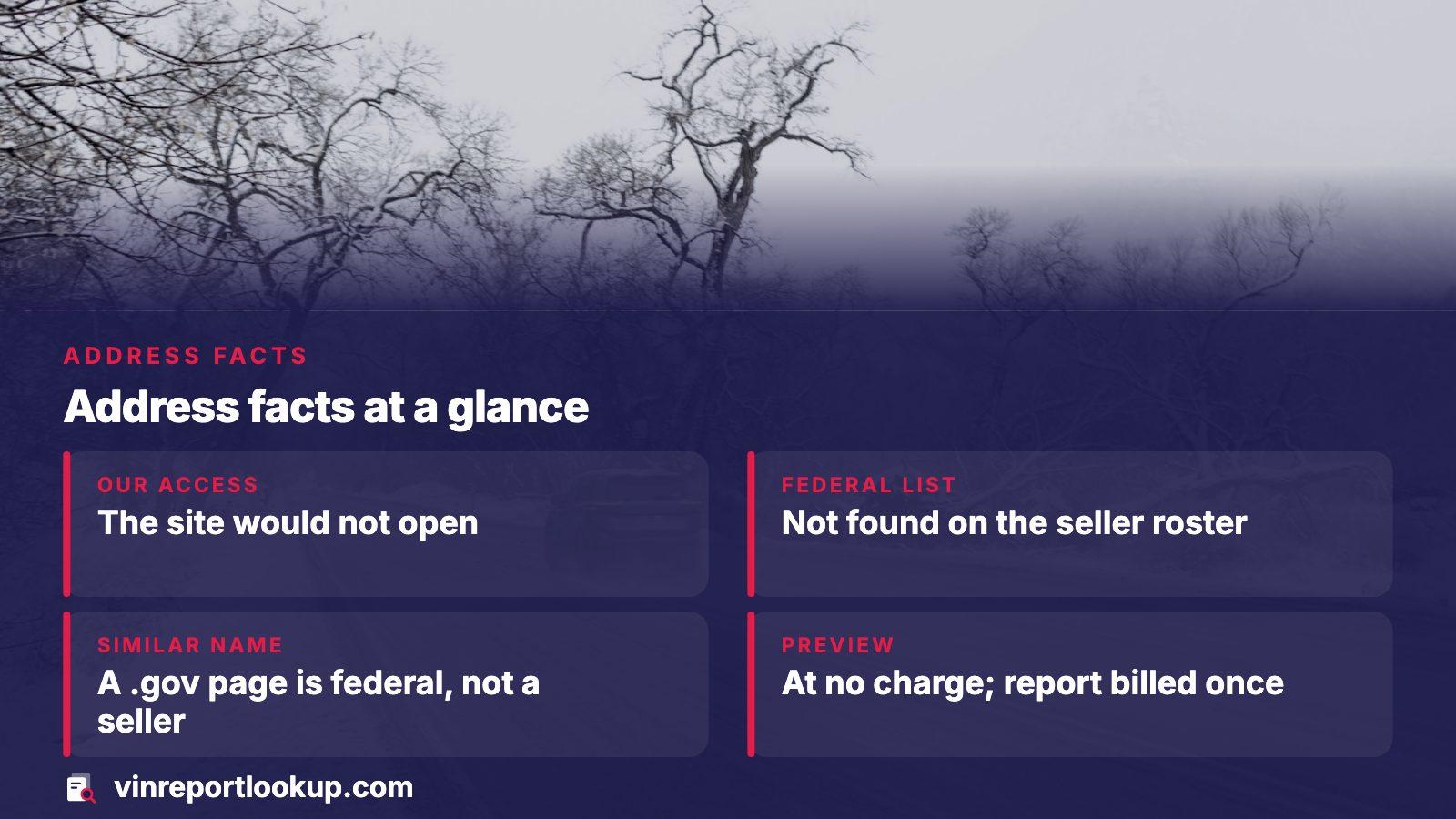
- Our access
- The site would not open for us, so nothing on it was read
- Federal list
- Not found on the Justice Department seller roster
- Similar name
- vehiclehistory.gov is a federal page, not a seller
- VINReportLookup
- Preview at no charge; report billed once
What stayed unconfirmed, and why
We tried to read the site directly with ordinary tools and a browser. The address would not resolve in one case and was refused in the other. That means we saw no price, no terms of use, no company details and no sample report from vehiclehistory.com, and a page that reviews a seller without reading its pages would be guessing.
So this page does not call the site a scam, and it does not vouch for it either. Search results full of star ratings will not settle it for you, and the sections below are built around that gap: what an official source says about report sellers, and what you can check yourself in about ten minutes.
Scope of this page
It is not a verdict on a company we could not read. It is a method for reaching your own verdict, plus a plain statement of what stayed unconfirmed.
The government address and the dot-com are different things
Part of the confusion is the name. The federal title database, NMVTIS, runs a consumer page that used to live at vehiclehistory.gov and now lands on a Bureau of Justice Assistance address. It is a directory, not a store: it sends you to outside vendors approved to sell title reports to the public.
A dot-com with nearly the same words is a separate organization unless its own pages say otherwise. A matching name tells you nothing about who runs a site, who supplies its data or what it charges, so treat the shared words as a coincidence until a page proves a link.
What the approved-provider list does and does not tell you
That Justice Department page lists the firms approved to provide NMVTIS data to consumers, with extra storefronts shown beneath the provider that owns them. We searched the page source for vehiclehistory.com and found no hit. One similar name, VehicleHistoryReport.com, appears once, under a different approved provider.
Read that carefully. Being absent from the list does not mean a site uses no federal data, because a business can buy records from an approved provider without being listed itself. We could not find out where vehiclehistory.com gets its records. The page adds that Carfax, DMVDesk and Experian do not give NMVTIS reports to consumers, only to dealerships.
A ten-minute test for any report seller
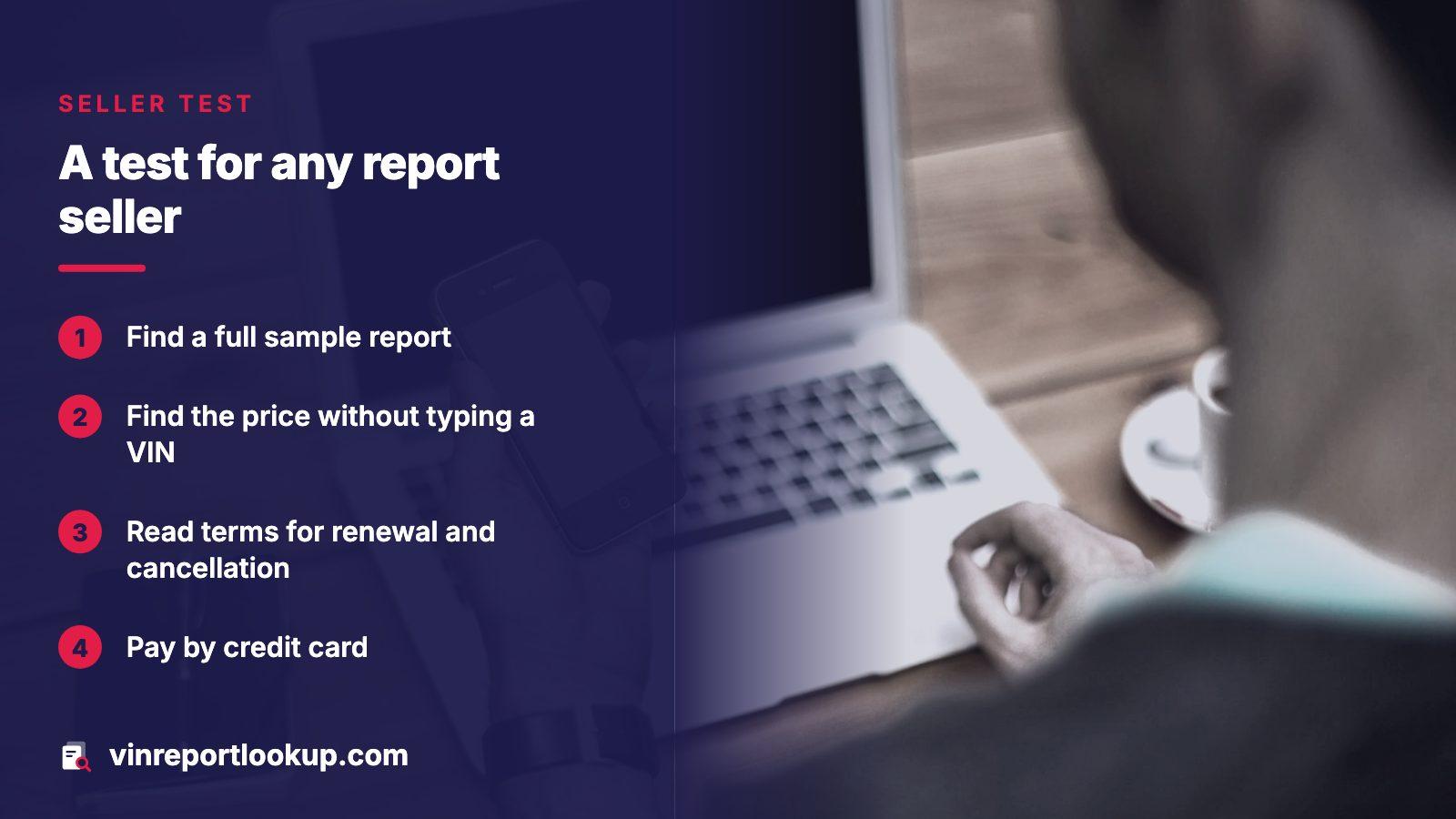
The FTC's advice on report scams is short: if you do not know who runs a site, slow down, and search the company name alongside words like complaint, review, rating or scam. Add these checks, all of which you can do before entering a card:
- Find a full sample report on the seller's own site and compare its sections with what you need for your car.
- Find the price on a page you can reach without typing a VIN, and note whether it is a single payment or a recurring plan.
- Read the terms for renewal, cancellation and refunds, and find a company address and a support contact.
- Check whether the seller names its title-data provider, then look that provider up on the federal list.
- Pay by credit card, so a billing dispute stays possible.
The scam pattern the FTC describes
In its 2018 alert, the FTC described people selling cars online who were contacted by a would-be buyer insisting on a report from one particular website, costing roughly $20 on a card. After the seller passed the report along, the buyer vanished. Clicking through landed on web addresses ending in .vin, a suffix created with wine in mind.
The agency warns that a site like that may be after card numbers and other personal data, or may be gathering names to sell to marketers. The takeaway is about who chose the site. A report you picked from a seller you checked is not the same deal as a report a stranger pushes you to buy.
What any report can miss, whoever sells it
Justice Department pages are frank about limits. A federal title report is deliberately short, built on five indicators of fraud and theft. Reach is broad but uneven: 87 percent of vehicles are in the system, yet a clean answer can be wrong when some source never filed its records, and private databases share that weakness.
- Each state applies damage brands under its own rules, which means one wreck may carry a brand in a single state and none elsewhere.
- An insurer can write off a theft that nobody recovered inside 30 days, and the write-off sticks after the car reappears in good shape.
- NMVTIS holds only a slice of what a state keeps, so ask the state for its own title file as well.
- A report records what someone reported, which is why it cannot replace a mechanic's inspection.
Start with the lookups that cost nothing
Before buying anything, put the VIN into NHTSA's recall search. For that exact car it shows any recall not yet repaired, and it displays zero when none are open. Repaired recalls, some brand-new ones and anything older than 15 years are missing, so a clean result is partial.
NHTSA points to the lower left of the windshield for the 17-character VIN, then the registration card, and lists the insurance card as one more possible place. Comparing the number across those spots is a test in itself: paperwork that disagrees with the glass tells you something before any report loads.
A lower-risk way to check the car in front of you
VINReportLookup is built around choosing a report with your eyes open. Enter the VIN and a preview appears without charge, so you learn whether any records are held on that car ahead of paying. The full report is billed once for one car, with no renewal, and a pack of several suits anyone comparing cars.
Sections that matter most when judging a seller's car include title brands, damage and accident entries, odometer history, auction and salvage photos, liens and theft flags. The current price is on the pricing page, which you can read without entering a VIN. We make no claim about what vehiclehistory.com offers, only about our own steps.
What to do next
If you already hold a vehiclehistory.com report or a link someone sent, hold off on entering more personal details until you have run the ten-minute test. Compare the VIN printed on the report with the car and its paperwork, and note the date the report was run.
If you already paid and the charge looks wrong, contact the card issuer and ask about a billing dispute. Then run a check of your own on the VIN, starting with the free preview, and have the car inspected before any deposit changes hands.
Where this information comes from
- Justice Department NMVTIS: provider roster — The roster we searched for the address, plus the line on who cannot sell to consumers.
- Justice Department NMVTIS: for consumers — What a federal title search covers, where its coverage has holes, and how states differ.
- FTC: steering clear of vehicle history report scams — The report-scam pattern and the advice to search a company name with complaint or scam.
- NHTSA: recall search — Scope of the recall lookup by VIN, including what it leaves out.
Sources and photos: Facts checked against the sources above in November 2026. Photos by Maurice Sahl, Alejandro Escamilla and Zoshua Colah on Unsplash; diagrams by VINReportLookup.
Keep reading
- Vehicle history report scams: how to spot a fake report seller before you payMore ways report sellers and fake buyers try to get your money.
- Carfax vs NMVTIS: what each report shows and which to buyHow the federal title record differs from a private report.
- Best VIN check: how to choose a report and what each one includesHow to pick a report once you know what you need.
- Sample reportSee a full report before deciding to pay.
Frequently asked questions
Is vehiclehistory.com a scam?
We cannot say. The site would not open for us, so we read no price, terms or sample report. Nothing we found marks it as fraudulent, and nothing vouches for it. Use the checks on this page: find a sample, the price and the cancellation terms, search the company name with complaint or scam, and pay by credit card.
Is vehiclehistory.com the same as vehiclehistory.gov?
No reason to think so. The .gov name was the federal NMVTIS consumer site, which now sits at a Justice Department address and lists approved vendors rather than selling reports. A dot-com with similar words is a separate address, and shared wording does not show shared ownership. Check who operates a site on its own pages.
Does a site missing from the federal list mean it is fake?
Not by itself. Businesses can buy title data from an approved provider without being listed, so absence is a prompt to ask where the data come from, not proof of fraud. A seller that names its data source and shows a sample report is easier to trust than one that does neither.
How can I tell whether a report seller is trustworthy?
Look for a visible price, a full sample report, plain renewal and refund terms, a company address and a support contact. Search the seller's name with words like review, rating and scam, and read more than star counts. Paying by credit card keeps a billing dispute available if something goes wrong.
Can I check a car's VIN without paying a report site first?
Yes, in part. NHTSA's recall search by VIN shows whether that car has an unrepaired recall. It omits repaired and old recalls, and it says nothing about title brands or accidents. For those, use a report from a seller you have vetted, starting with a free preview such as ours.
Now check the car itself
The guide explains what to look for. The report shows what this VIN has on record.