THE SHORT ANSWER
Sites like carVertical fall into three groups. Other approved NMVTIS sellers, such as VinAudit and GoodCar, deliver the federal title and brand record. Subscription services such as Bumper bill monthly. One-time reports, including this site's, show a free preview and then take a single payment. Compare the sections each shows for your VIN, then read the billing terms before you enter a card.
- carVertical's own scale claim
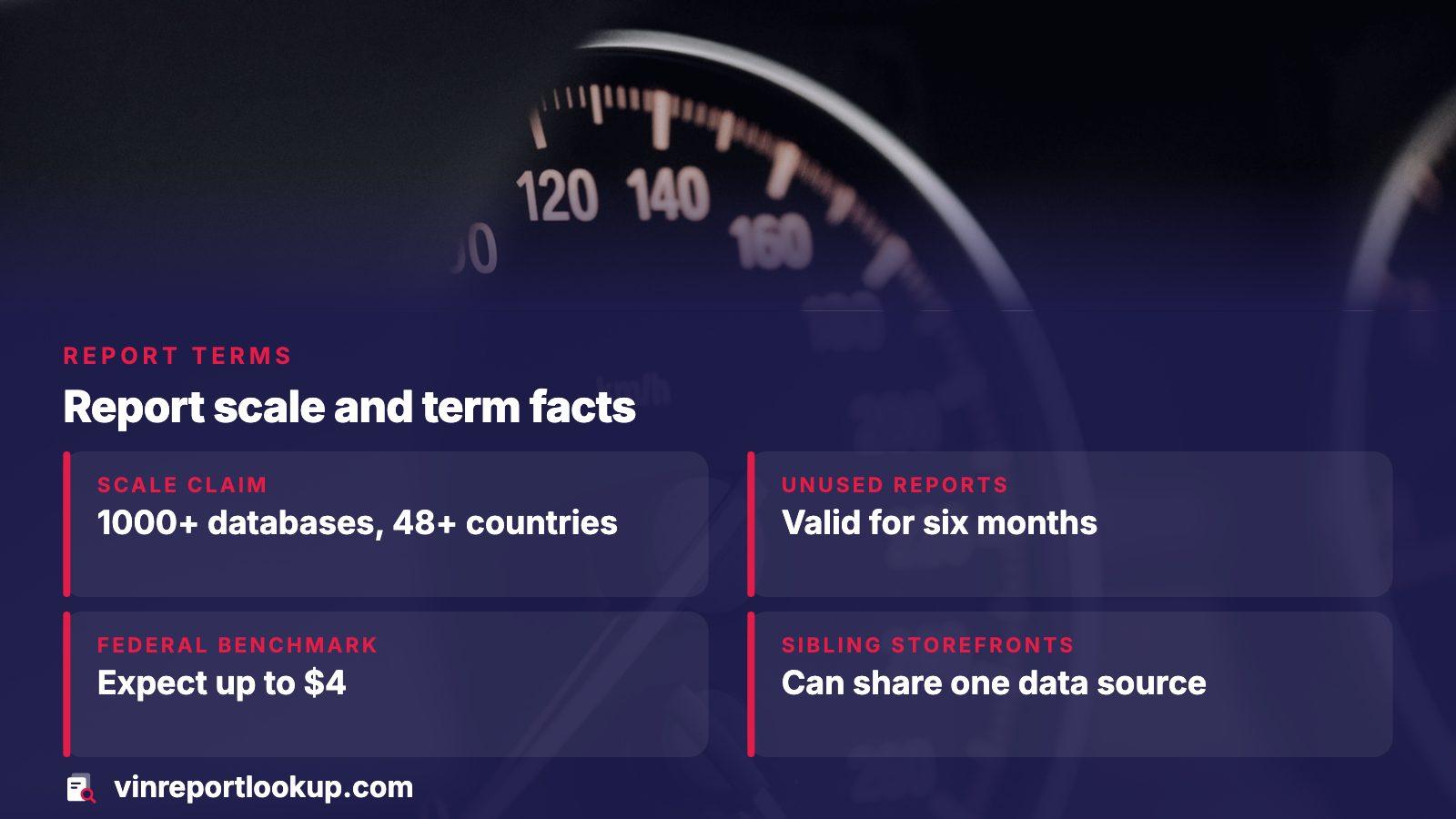
- 1000+ databases across 48+ countries
- Unused carVertical reports
- Valid for six months, per its terms
- VinAudit's stated prices
- $9.99 single, $19.99 for five, $29.99 for ten
- Federal record benchmark
- The Justice Department says to expect up to $4
Why buyers look past carVertical
carVertical is a real provider: the Justice Department lists Carvertical.com among the approved sellers of NMVTIS data to the public. Shoppers compare it anyway, and the reasons are ordinary. A buyer wants a second report on a car they are close to paying for, or wants a seller with a posted price, or would rather skip a company whose strength is data from abroad when the car never left Ohio.
That last point is the honest framing. carVertical says it pulls from 1000+ databases across 48+ countries, so its pitch leans on records from abroad. For a car that has only ever been registered in the United States, the useful question is narrower: does this seller show the title, brand, odometer and damage entries that US sources report?
What carVertical says about its own report
Everything in this section comes from carVertical's own US pages. I could not read a price there. The pricing page explains that every request to a data source costs money, which is why reports are not given away, and the amount appears at checkout. Check it yourself before comparing.
| Point | What its pages state |
|---|---|
| Parts of the report | Damage, mileage, title check, timeline, market price, specs, safety ratings, disaster exposure, emissions |
| Speed | A finished report about 40 seconds after payment |
| Bundles | Advertised savings of up to 40 percent |
| Data caveat | It does not own the data, so entries depend on availability |
| Legal weight | Not usable as court evidence |
| Payment | Cards and PayPal on the pricing page; its terms add bank transfer and crypto |
Treat its headline figures as marketing. The company claims about 1 in 4 of the American cars it screens carries damage on file, and that the odometer fraud it uncovers usually conceals around 35,000 miles. Those averages describe its own customer base. They say little about your particular car.
The three kinds of alternative
Most lists of sites like carVertical mix very different products. Sorting them by billing model makes the comparison honest, because the same-sounding report can cost very different amounts depending on how you pay.
| Kind | Example as stated on its own page | How you pay |
|---|---|---|
| Approved NMVTIS seller, pay per report | VinAudit: $9.99 single, $19.99 for five, $29.99 for ten | One purchase, with larger packs |
| Subscription service | Bumper: plans from $27.99 per month | Recurring until you cancel |
| Trial-led seller | GoodCar: 7-day unlimited lookups at $1.95, single report at $44.99 | Read what follows the trial |
| Preview then one payment | This site | Free preview, then a one-time purchase |
The prices above are what each company showed on its page when I read it, and they change. The GoodCar page I read did not explain what happens once the trial days end, so read that screen before paying. Bumper's page says a trial rolls into the standard recurring rate unless you cancel.
Start from the federal record, not the brand
Every provider on the Justice Department's approved list draws on one government database. It holds the title as it stands now with any brands, the newest odometer readings, and insurer verdicts of salvage or total loss, along with hand-offs to recyclers and junkyards. So the first comparison is not which logo you like. It is what each seller adds on top of that shared record.
The department's own buying tips put the federal report at up to $4. Sellers charge more because they bundle extras such as market value, specs or photos. That is a fair trade if you use the extras, and a poor one if you only wanted a brand check.
A clean result is not a guarantee
Federal guidance concedes that an empty search result can be wrong. Roughly 87 percent of vehicles nationwide sit in the system, but reporting comes from just over half the states, and the database holds around 20 million salvage or total-loss entries. When a report finds nothing, it has only searched what exists.
Watch for two storefronts on one data source
The approved list shows that some providers own several consumer websites. One company can run a brand you know and two you have never heard of, all drawing on the same approval. Running a car through two of them gives you a repeat, not a second opinion.
For a genuine cross-check, pair a paid report with a different type of source. An open-recall search shows safety campaigns the title record never mentions, and a free insurer-run theft and salvage lookup draws on member claims data. Disagreement between unlike sources tells you something. Agreement between twins does not.
- Check which approved provider owns the storefront you are about to use.
- Pick a second source from a different family, not a sibling site.
Billing terms worth reading before you pay
carVertical's terms are specific, and they set a useful bar for any seller you compare. A purchased report you never open stays valid for six months. Once you generate it, you can view it in the browser for 30 days, then it disappears and cannot be saved as a PDF.
The same terms give a consumer 14 days to withdraw from a purchase of unused reports by email, with a partly used pack refunded in proportion. A report that returns no history in the odometer, damage or timeline parts is classed as a no-findings report, and your account gets the credit back. Ask any alternative for equivalent terms in writing.
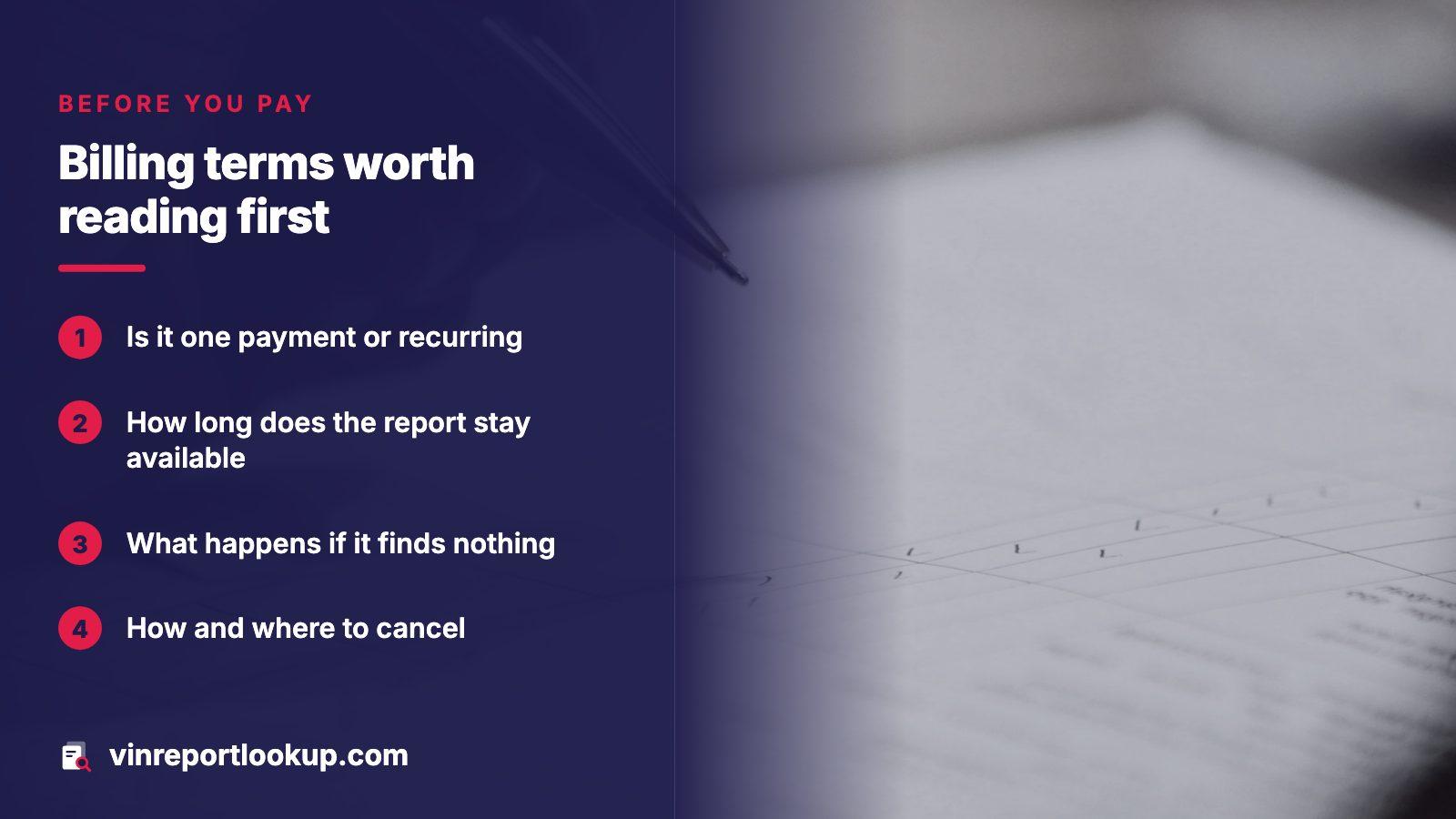
- Find out whether the charge is one payment or recurring.
- Find out how long the finished report stays available.
- Find out what a report with no findings does to your payment.
- Find out how to cancel, and where.
Matching a report to your specific car
Start with the car, not the review. A vehicle that arrived from overseas is where an international data pitch can matter, and the shopper for a domestic sedan may be better served by a straightforward title-and-damage report from any approved seller. A rolled-back odometer, a branded title and a recorded total loss are the three findings that most often end a deal, so make sure the report you pick names them as sections.
Then weigh the extras you will use. Market value helps in a price negotiation. A timeline helps you spot what happened just before a listing appeared. A mechanic is still needed, and the Justice Department's buying tips list an independent inspection and a test drive alongside any history report, and no database reads the brakes.
What no report here will do
No VIN report names a previous owner, and none replaces the title in your hand.
Running the check on this site
VINReportLookup works as a pay-once option. Type in the 17-character VIN and read the free preview, which hints at whether records exist for that car. Only then decide on the full report. The purchase happens once, for one report or a bundle sized 3, 5 or 10, and no plan renews itself. The pricing page carries today's amounts.
Look at the preview before spending elsewhere. If it turns up nothing on a car you are nearly ready to buy, a second look from a differently sourced check costs less than guessing. If it shows a brand or damage entry, you have a price conversation to have, or a reason to leave.
Where this information comes from
- Justice Department: approved NMVTIS data providers — confirms which sellers are approved for the public and which own extra storefronts
- Justice Department: NMVTIS consumer information — what the federal record holds and the false-negative warning
- Justice Department: used car buying tips — the up-to-$4 benchmark and inspection advice
- carVertical US: terms and conditions — report validity, viewing window, withdrawal and no-findings handling
- carVertical US: pricing and FAQ — data caveats, payment methods and the court-evidence statement
- VinAudit — its stated single and pack prices
- Bumper — plan start price and cancel routes as Bumper states them
Sources and photos: Facts checked against the sources above in November 2026. Photos by Richard R, Masjid MABA and CHUTTERSNAP on Unsplash; diagrams by VINReportLookup.
Keep reading
- Carfax vs carVertical: how to choose the report for one used carA direct comparison of the premium name and this import-minded provider
- Vehicle history report providers: who sells VIN reports and how they differWho sells reports and where the title data originates
- Best VIN check: how to choose a report and what each one includesChoosing a report by the question you still need answered
- Sample reportSee the sections a finished report lays out
Frequently asked questions
What is the best alternative to carVertical?
It depends on the gap you want filled. For the federal title and brand record, any other approved NMVTIS seller works, and prices differ a lot. For a single car with no recurring charge, a one-time report after a free preview is the simplest fit. Compare sections for your VIN and read the billing terms first.
Are there sites like carVertical that are cheaper?
Some sellers state lower per-report prices. VinAudit's own page shows $9.99 for one report and cheaper packs. Prices move, and carVertical shows its amount only at checkout, so compare the same day. Cost per report matters less than whether the report includes the sections you need.
Is carVertical legitimate in the US?
Carvertical.com appears on the Justice Department's roster of approved title-data sellers, for public and commercial buyers alike. That confirms the federal credential. It does not rate report quality, and carVertical itself says report contents depend on available data.
Can I get a refund on a VIN report?
It depends on the seller. carVertical's terms allow withdrawal from unused reports within 14 days, proportionate refunds on part-used packs and a credit back for no-findings reports. Other sellers differ, so read the terms page before you pay, not after.
Should I run two different VIN reports on one car?
Only if they use different kinds of sources. Two storefronts under one approved provider repeat the same data. A paid title report plus an open-recall search, or an insurer-run theft lookup, gives you a real second view. A mechanic's inspection adds what no database can.
Now check the car itself
The guide explains what to look for. The report shows what this VIN has on record.