THE SHORT ANSWER
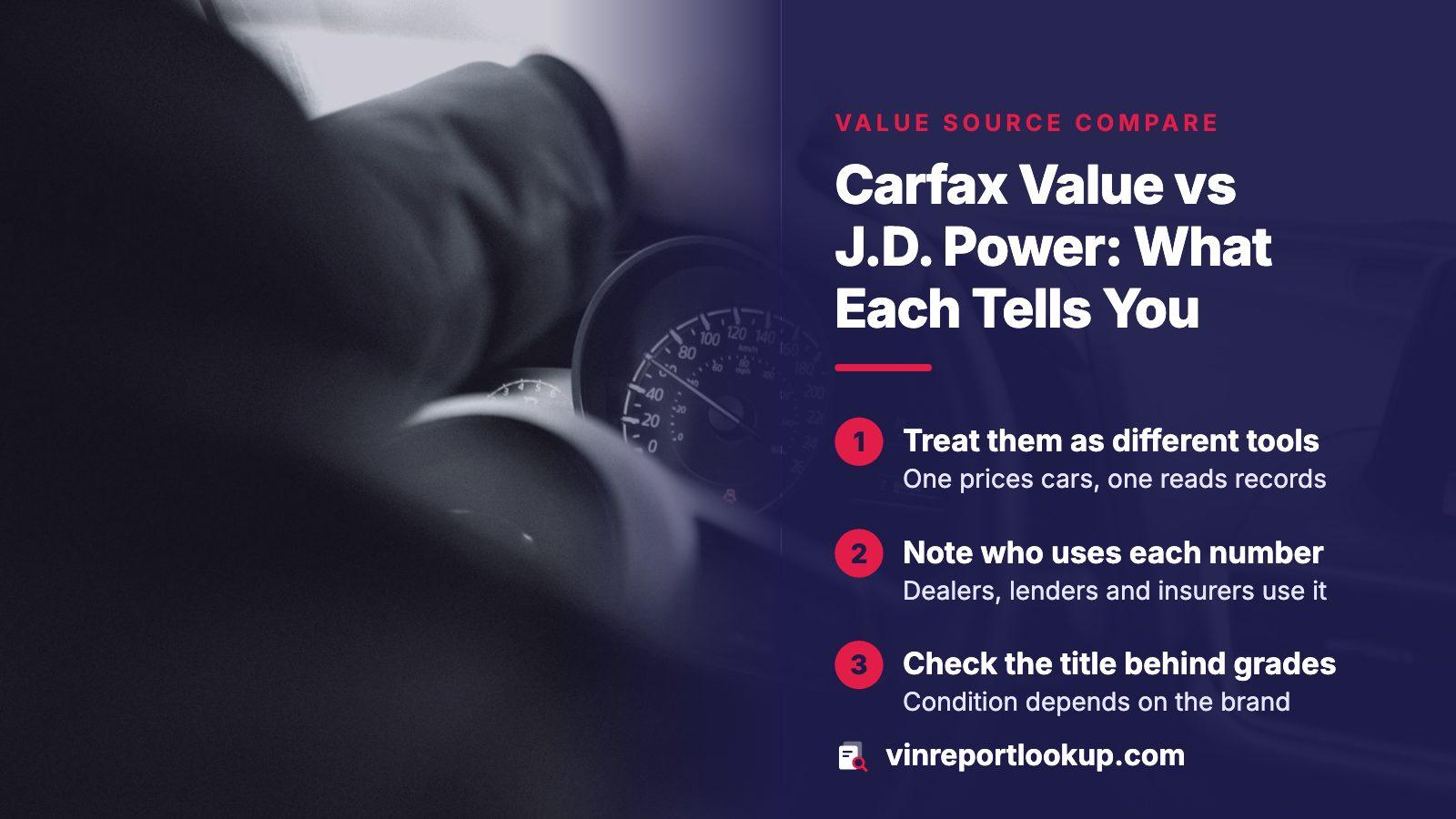
Neither figure outranks the other, because they answer different questions. J.D. Power says its trade-in values come from over 12 million retail sales a year, and its guides serve dealers, lenders and insurers. Carfax's own value pages would not open for automated reading, so its method is not described here. Use each as a reference, check the condition grade against title and damage records, and treat a written dealer offer as the real number.
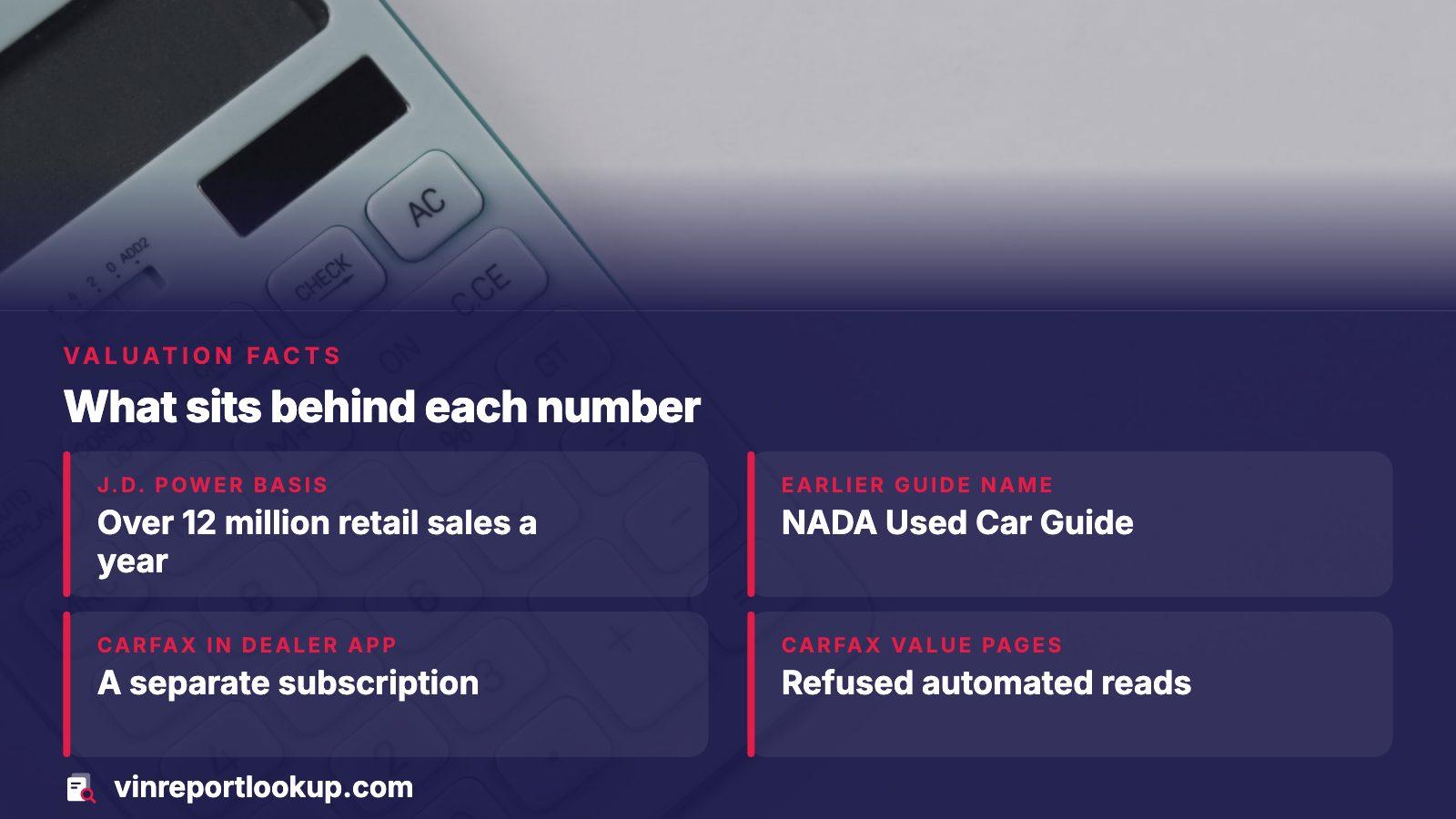
- J.D. Power trade-in basis
- Over 12 million retail sales a year, by its own count
- J.D. Power guide's earlier name
- NADA Used Car Guide
- Carfax inside J.D. Power's dealer app
- A separate subscription
- Carfax's own value pages
- Refused automated reads, so not described here
Why these two names are not really rivals
Searchers pair the names as if one should confirm the other, yet they sit in different corners of the used-car market. J.D. Power Valuation Services is the business formerly known as the NADA Used Car Guide, and what it sells is a price reference for a type of vehicle: year, make, model, trim, mileage. The FTC lists Carfax.com among providers of vehicle history reports. So the fair comparison is a price guide on one side and a record of one car on the other. A guide describes the market. A report describes the car in front of you.
What this page could not read
Carfax's value page and its support article refused every automated request, so nothing here explains how Carfax builds its figure or what its condition labels mean. The J.D. Power material comes from J.D. Power's own consumer and business pages, and the rest from federal agencies. Whatever Carfax number you hold, copy the labels printed beside it: value type, condition, mileage and date.
How J.D. Power says it prices a car
On its trade-in page, J.D. Power says the figures are built from over 12 million retail sales a year. They run through its Power Information Network, which J.D. Power says collects transactions daily from over 16,000 North American dealerships, and each valuation report generates more than 250 metrics, among them trim, mileage and condition. The consumer form wants only four details: year, make, model and trim level.
The business side is organized differently. The guide lists trade-in values at rough, average and clean grades, plus loan and retail values and an optional certified premium, with mileage and accessory adjustments on top. The regional retail value in MarketValues takes a VIN along with a ZIP code, the mileage and, if you like, a trim. When no local retail figure exists it falls back to a regional or national average, so the number you see depends on the door you came through.
Who actually leans on each number
| Reader | What they look at | What it means for you |
|---|---|---|
| A dealer taking your trade | Trade-in value by rough, average or clean grade | The grade assigned to your car shapes the offer |
| A bank or credit union | Loan value, its own column apart from trade-in and retail | Purpose changes the figure, so a lender's reference need not match a retail price |
| An insurer after a total loss | Insurance agencies appear among the guide's subscribers | The CFPB says an ordinary auto policy pays no more than the vehicle's value |
| You, before paying | The records tied to one VIN | The only view of this particular car |
None of these readers sees your car. They see a typical one. If the loan balance runs past the car's value, the CFPB describes GAP as an optional product meant to cover the shortfall after a theft or total loss.
Where a condition grade depends on the title
J.D. Power's own definitions show how tightly the two are tied. Its FAQ describes both clean and average cars as having a clean title history. The rough grade is the one that may carry a branded title, and it also lists frame damage, rust and obvious signs of earlier repair. Picking a grade quietly claims something about records you may not have read. J.D. Power's trade-in page adds that a clean history without major accidents or repairs earns a higher trade-in value, and the tool it names for pulling that history is AutoCheck, not Carfax.
- Choose clean or average only if the records show a clean title.
- If the records show a salvage, flood or junk brand, those two descriptions no longer fit, whatever the car looks like.
- Read accident and damage entries before deciding the paint, body and frame deserve a high grade.
Running the comparison before you pay anyone
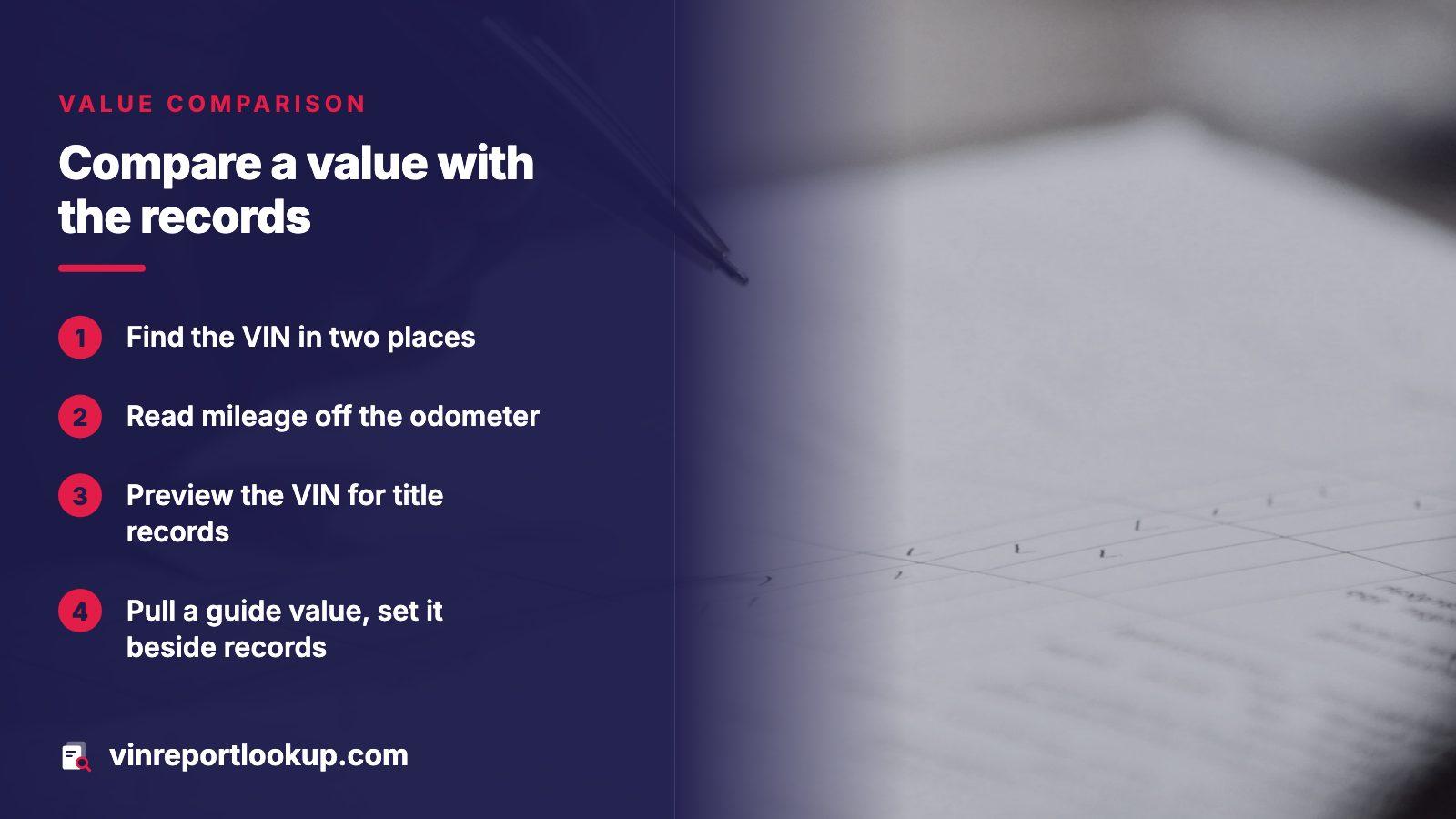
- Locate the 17-character VIN in two spots, the dash plate and the sticker in the door frame, and match both against the title.
- Take mileage from the odometer, not from the listing.
- Enter the VIN at VINReportLookup and note what the preview reports for the car.
- Pull a guide value and record whether it is a trade-in, private party or retail figure, along with the grade assumed.
- Set the two side by side and adjust the grade to the records, never the records to the grade.
When the number and the records disagree
Most gaps between a guide figure and a report trace back to one wrong input. Look for these first.
- A value that assumes a clean title while the report shows a brand.
- Mileage typed from memory that differs from the odometer readings on file.
- A car built for another country's market, since J.D. Power says its valuations apply only to vehicles built for sale in the United States.
- A guessed trim: J.D. Power says ordinary VIN decoding misses many factory features and packages, so confirm trim and options against the specs on the report.
- A certified premium on a car no manufacturer ever certified. J.D. Power describes that premium as a typical uplift when a franchised dealer sells under a certification program.
What a clean record can and cannot prove
The Justice Department calls its federal title report intentionally concise, built on five key indicators, among them brand history on the title, the newest odometer reading, an insurer's total-loss or salvage call, and any handoff to a junk or salvage yard. A clean result is good news, it says, yet a search can still miss a record because not every entity reports, and states brand cars by their own rules. Read each entry's detail, and look at the state's own title record too.
Where a report fits and what it costs
The free preview comes first. Once a car makes your shortlist, the full report is one payment, or you can pick a larger set of 3, 5 or 10 reports, and nothing renews on a schedule. Current amounts live on the pricing page. You are buying the record side of the comparison: crash and damage entries, recorded odometer readings, open recalls, any title brand and a market value line to hold beside a J.D. Power or Carfax figure.
The FTC is blunt that a report cannot replace a separate inspection by an independent mechanic. Use the report to ask sharper questions, then let the mechanic settle the car's condition. Collect quotes from several dealers, as the CFPB advises, and compare each against the payoff amount from your lender, which may not equal the balance printed on your statement.
Where this information comes from
- J.D. Power: Trade-in value — J.D. Power's account of its retail-transaction data, the details its form asks for, and what it says about vehicle history.
- JD Power Valuation Services: Official Used Car Guide — The guide's former NADA name, the value types it lists and who subscribes.
- JD Power Valuation Services: MarketValues — Inputs for the regional retail value and the note that a Carfax subscription is sold separately.
- JD Power Valuation Services: FAQs — How J.D. Power defines condition grades, its United States scope, VIN decoding and the certified premium.
- FTC: Used cars — What a history report may list, the providers it names, and the line that a report does not replace an inspection.
- DOJ NMVTIS: For consumers — The five title indicators and why a clean search can still miss records.
- CFPB: What is GAP insurance — How standard insurance pays up to a vehicle's value and what the optional GAP product is meant to cover.
Sources and photos: Facts checked against the sources above in November 2026. Photos by Miles Loewen, Masjid MABA and Sasun Bughdaryan on Unsplash; diagrams by VINReportLookup.
Keep reading
- Carfax vs KBB trade-in value: which figure to trust and whyThe same comparison run against Kelley Blue Book's trade-in range.
- Carfax alternatives: what each VIN report option covers and costsOther history report providers to weigh against a Carfax report.
- Carfax vs inspection: what each shows and which to buy firstWhat a report can settle and what only a mechanic can.
- Sample reportA worked sample of the record sections a full report holds.
Frequently asked questions
Is the Carfax value the same as the J.D. Power value?
No. They come from different products, and this page could not read Carfax's own method. J.D. Power says its figures draw on retail dealer transactions and are used by dealers, banks and insurers. Even J.D. Power's dealer app treats Carfax as a separate subscription, so expect two different numbers and compare the value type, grade and mileage behind each.
Is J.D. Power the same thing as NADA?
J.D. Power Valuation Services describes itself as the former NADA Used Car Guide, so older NADA references now point to J.D. Power's guide. The FTC and CFPB still name NADA Guides as a place to check a car's worth. Treat NADA and J.D. Power as one family of figures, then confirm the grade against the car's records.
Which value will my lender or insurer use?
Ask them. J.D. Power lists banks, credit unions and insurance agencies among its subscribers and publishes a separate loan value, but this page cannot say which guide any single lender or insurer picks. Ask how your policy values a total loss before a loss happens, since an ordinary policy pays no more than the vehicle's value.
Does a J.D. Power value account for a salvage or flood title?
The consumer form takes year, make, model and trim; title status is not among the fields. J.D. Power's condition definitions do tie the clean and average grades to a clean title history, and its rough grade may carry a brand. A salvage or flood brand therefore makes those grades a poor match, and only the VIN records show whether one exists.
Do I still need a history report if I already have a value?
Yes, for a different reason. A value says what similar cars bring. It cannot reveal a title brand, damage entries or odometer readings for this VIN. The sound order is value, then records, then a mechanic's check before money changes hands.
Now check the car itself
The guide explains what to look for. The report shows what this VIN has on record.