THE SHORT ANSWER
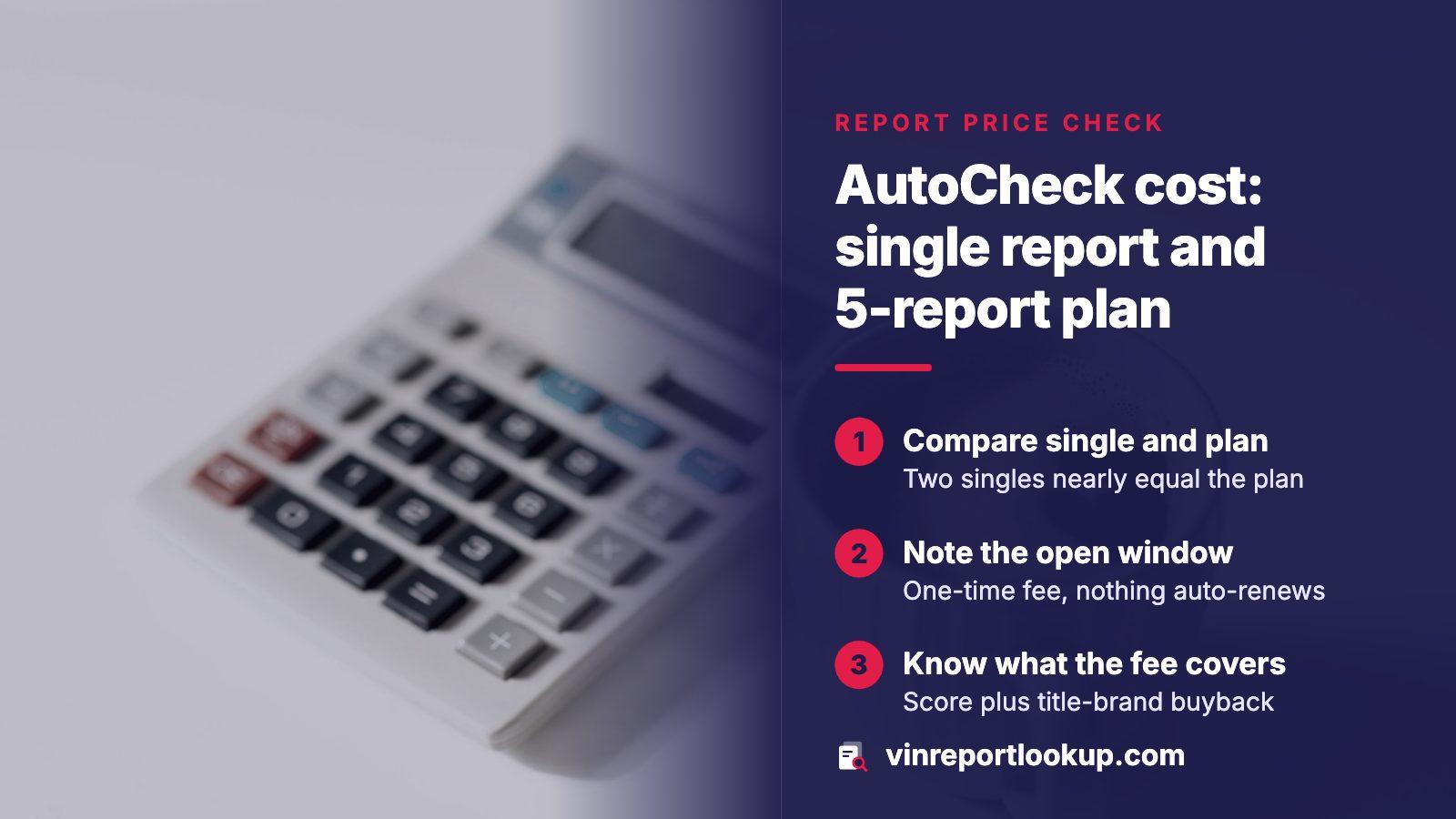
AutoCheck charges $29.99 for a single report and $59.99 for a five-report plan, and both stay open for 21 days with no automatic renewal. Two singles cost about as much as the plan, so the plan pays off from the third car. The fee buys an Experian history, a 1 to 100 Score and buyback protection for missed state title brands. Carfax publishes its own figure, so compare the two order pages on the same day.
- Single report
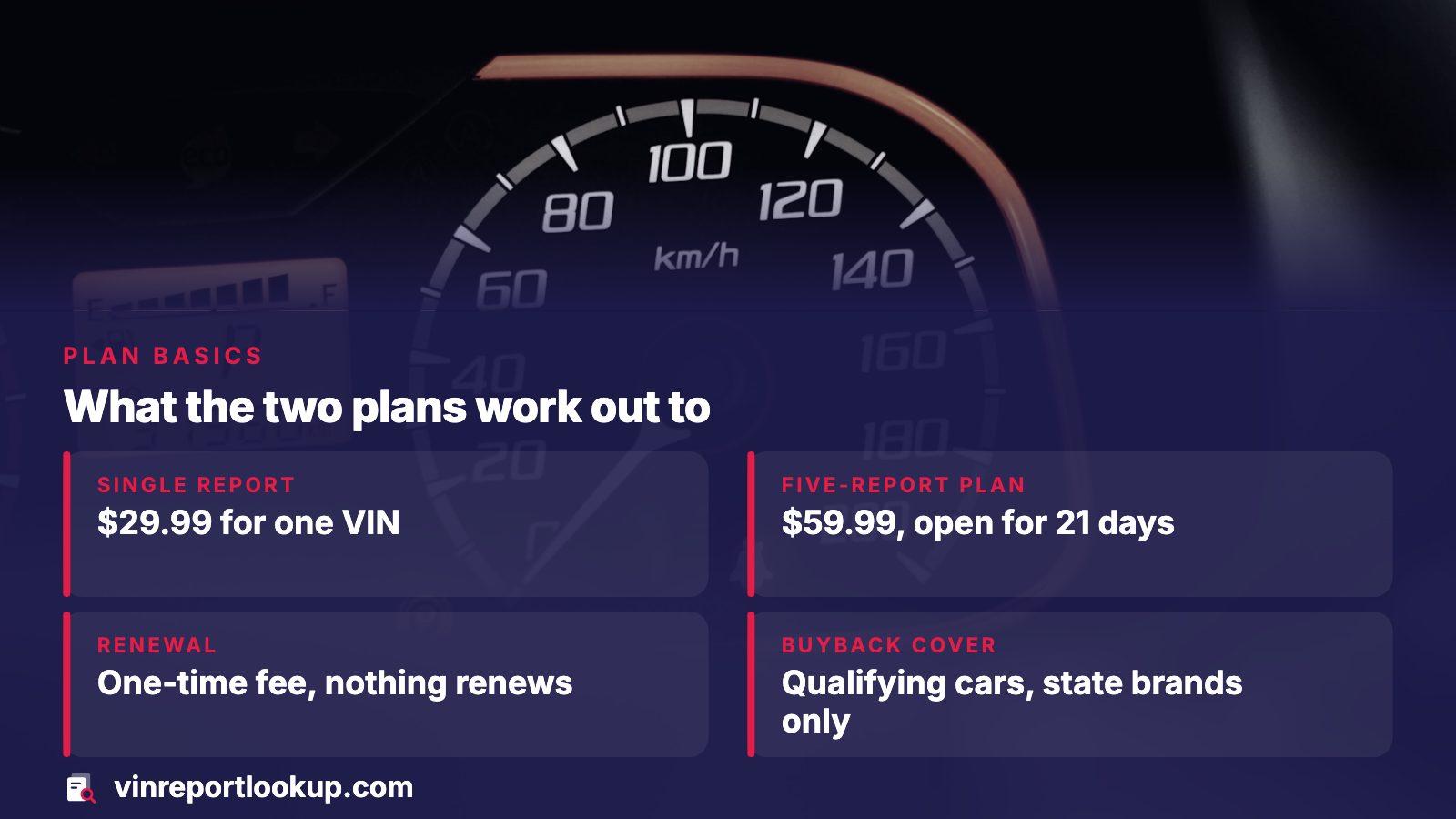
- $29.99 for one VIN
- Five-report plan
- $59.99, open for 21 days
- Renewal
- One-time fee, nothing renews itself
- Buyback protection
- Included on qualifying cars, state title brands only
What AutoCheck's two consumer plans cost
Experian's AutoCheck sells to private buyers through two plans. Both appeared on its order page when we opened it on November 5, 2026, and both are described as a one-time fee.
| Plan | Price on the order page | What the page says it includes |
|---|---|---|
| Single report | $29.99 | One report for one VIN, with live data updates for 21 days |
| Five reports | $59.99 | Five reports inside a 21-day window, updated through the term |
Packages for dealerships, lenders and auctions also exist, but they go through a request form and are not aimed at private buyers.
What the 21-day window changes
A plan is a stretch of time, not a permanent library. Reports you buy stay on your dashboard while the term runs. After it ends, saved VINs lock until you press the activate button, and AutoCheck says your card is charged only when you buy or renew.
The arithmetic is short. Two single reports come to about the price of the five-report plan, so the plan earns its place once a third car joins the list. It also suits a shopper without a VIN yet, since AutoCheck lets you pay first and type VINs in later, even while standing on a dealer's lot.
Count the cars first
Buy the plan only if you expect three or more VINs inside three weeks. With one car left on your list, the single report is the cheaper way in.
What a report holds for the money
AutoCheck describes its report as title, registration and usage history drawn from hundreds of sources, among them state motor vehicle agencies, auto auctions, dealers and consumer protection bodies. It screens for these items:
- Junk or salvage status, plus hail, flood and fire damage
- Mileage discrepancies and odometer rollback
- Lemon buybacks, gray-market imports, and abandoned or forfeited cars
- Rental, taxi or fleet use
- Theft entries
- Loans, liens and unpaid judgments tied to the car
- Accident damage, when someone passed it along to AutoCheck
Two limits come from AutoCheck's own wording: earlier owners are never named, and not every accident a car suffered will appear. Cars built for markets outside the US and Canada are not covered at all.
The Score and the buyback promise
AutoCheck reports carry a Score from 1 to 100. It estimates the odds that the car is still on the road in 5 years, measured against cars of similar class and age. Treat it as a quick ranking tool for a shortlist, and read the entries underneath before you trust it.
Buyback protection is available at no added cost on qualifying cars. If a state reported a title brand to Experian before your report ran and the report still missed it, Experian repurchases the car at up to 110% of the NADAguides retail value, plus up to $500 for aftermarket items.
- Run the report before you buy and keep a copy.
- Buy a car whose report shows the eligibility symbol on its first page.
- Register the car within 90 days of purchase.
- File within a year of the report date, enclosing a certified copy of the branded title, which must be at least 60 days old when the report was run.
Where the promise stops
Accidents, insurance losses and odometer rollback from commercial sources sit outside it. Claims take 4 to 6 weeks to review on average, so this is a way to recover money after a miss, not a way to spot trouble before you pay.
Carfax vs AutoCheck price: lining them up
This page prints no Carfax figure. Carfax's order page is the only place to read it, and any price can change. Open the two order pages on the day you buy and compare them item by item.
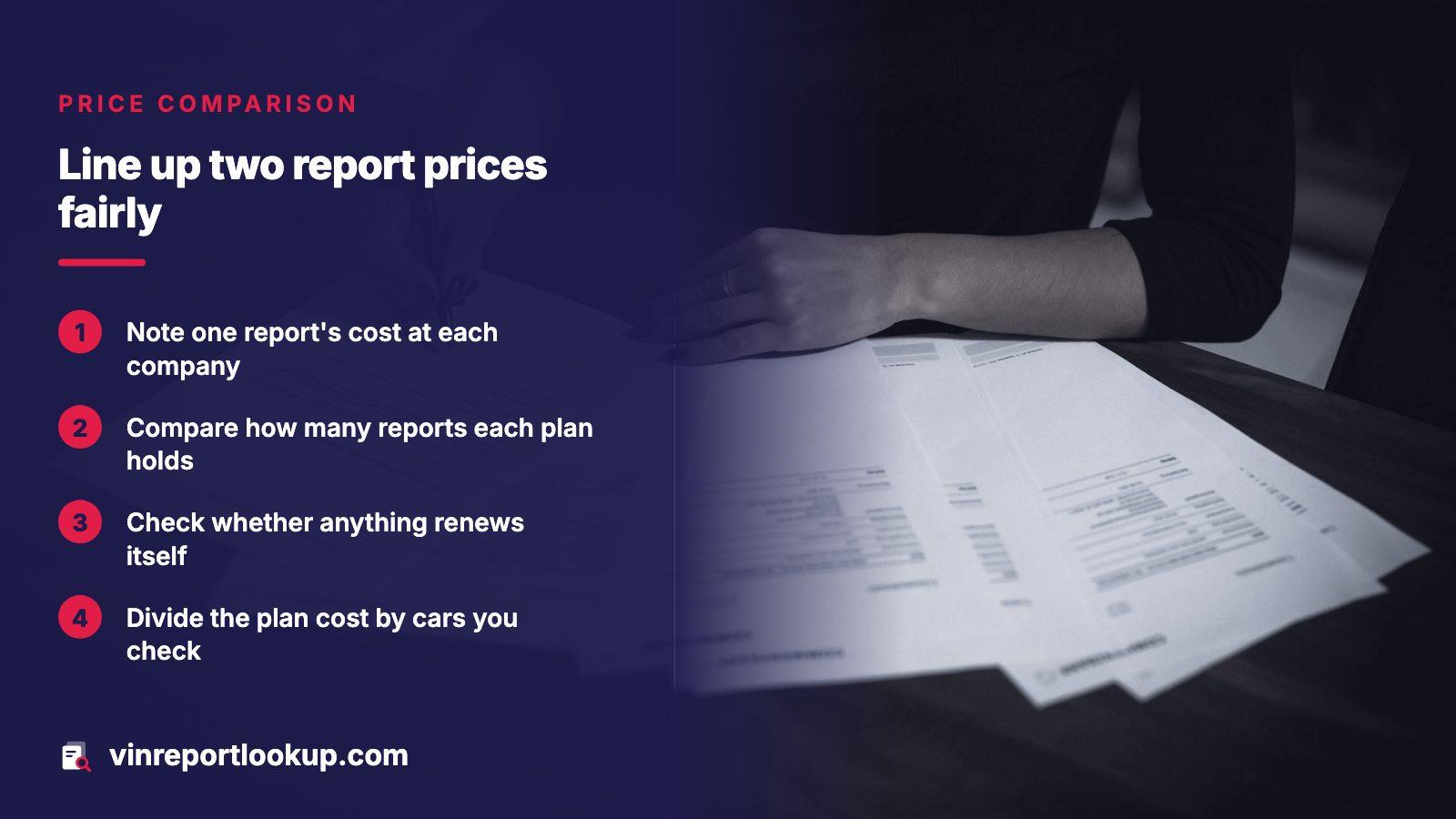
- Write down the cost of one report for one VIN at each company.
- Note how many reports each package includes and how long it stays open.
- Check whether anything renews on its own.
- Match what each lists against your worry: auction lanes, service visits or title brands.
- Divide each package price by the number of cars you will really check.
The federal title record: cheaper, and not sold to you by either firm
The Justice Department keeps a roster of businesses cleared to sell federal title reports. Twelve of them serve anyone; six are listed for commercial buyers alone. Experian.com is in that smaller group, and so is CARFAX.com, which the roster describes as offering the data to commercial buyers in California only. A note on the page says a private buyer cannot get these title reports from Carfax or Experian, since both supply dealerships.
Each provider sets its own price. In its FAQ the department reported per-report fees between $8 and $12.99 in May 2020 and gives no newer range. The record is deliberately short: title states, issue date, latest odometer reading, theft history, brands and total-loss entries. It holds no repair history.
No-charge lookups to run before paying anyone
NHTSA's recall search takes a VIN and lists any recall on that car still waiting for a repair. It will not show fixed recalls, very new announcements whose VINs are not yet loaded, recalls that passed the 15-year mark without extended cover from the maker, or campaigns by small manufacturers. Have the VIN ready: it is on the registration paperwork and on a small dash plate you can see from outside the car.
NICB's VINCheck matches a VIN against theft, salvage and flood losses reported by member insurers. Those insurers account for 92.49% of earned U.S. premium, NICB says. One IP address may run at most five searches in a 24-hour window, only insurance records are searched, and NICB itself cautions that a clean result proves nothing.
Where a VINReportLookup report fits the budget
VINReportLookup starts with a free preview. When the car still earns your attention, you pay once for the full report: no subscription, no expiring window. Packs hold 3, 5 or 10 reports, and the pricing page has the amounts.
Photos from salvage auctions, odometer readings over time, title brands and recorded damage are the entries that settle most buying questions, and the report gathers them in one place. It does not carry AutoCheck's Score or its buyback promise, so a buyer who wants either should buy from AutoCheck.
| Your situation | A sensible spend |
|---|---|
| Seller hands you an AutoCheck report | Confirm the VIN and run date match the car, then run the no-charge lookups yourself |
| One car left, price is high | A single report whose strength matches your worry, plus a mechanic's inspection |
| Three or more cars on the list | AutoCheck's five-report plan, or a pack here, whichever prices lower per car |
| Only the title worries you | A title record from an approved provider, priced by that provider |
Where this information comes from
- AutoCheck: order vehicle history reports — the two consumer plans, their prices and the 21-day term as posted
- AutoCheck: frequently asked questions — renewal, access after expiry, what the report screens for, the Score and its limits
- AutoCheck: vehicle buyback protection — payout limits, the 90-day registration step and what the promise excludes
- Justice Department NMVTIS: approved providers — which sellers serve consumers and where Carfax and Experian are listed
- Justice Department NMVTIS: frequently asked questions — provider-set fees, the May 2020 range and what a title record lacks
- NICB: VINCheck — the no-charge theft, salvage and flood screen and its limits
- NHTSA: check for recalls — the no-charge unrepaired-recall search by VIN and what it leaves out
Sources and photos: Facts checked against the sources above in November 2026. Photos by Ben Wicks, Dimitri Karastelev and muhammad dennisa on Unsplash; diagrams by VINReportLookup.
Keep reading
- How much a Carfax vehicle history report costs and what it coversThe Carfax side of the price comparison, and which prices official pages do state.
- AutoCheck vs Carfax: which VIN report to buy, and when to buy bothHow the two reports differ in what they hold, beyond the price.
- Carfax alternatives: what each VIN report option covers and costsOther ways to check a car when neither order page suits your budget.
- PricingCurrent amounts for a single report and each multi-report pack, once the free preview has done its job.
Frequently asked questions
Is AutoCheck cheaper than Carfax?
This page cannot give you a verdict, because Carfax posts its price on its own order page and none of the official pages used here list it. AutoCheck's two prices are above. Open both order pages the same day and compare the cost per report at the quantity you need, along with how long each package stays open.
Does the AutoCheck fee renew every month?
No. AutoCheck says the fee is one-time and your card is charged only when you buy, renew or extend. When the 21 days end, your saved reports stay on file but locked until you reactivate. If you bought the five-report plan, note the end date so a good lead is not stranded.
Can I pay for AutoCheck before I have a VIN?
Yes. AutoCheck lets you choose a plan, pay, and enter VINs later, which some shoppers do before visiting a dealership. Read the order page for when the 21 days begin before paying in advance, so the window is not half used up by the time you reach the car.
What if AutoCheck misses a salvage title?
Buyback protection can apply when a state reported the brand to Experian before your report ran, you registered within 90 days of buying and you claim within a year of the report date. It pays up to 110% of the NADAguides retail value plus up to $500 for accessories. Missed accidents are not covered.
Do I need AutoCheck and a federal title record both?
They answer different questions. The title record is short, comes from providers cleared to sell to the public, and Experian does not sell it to consumers. AutoCheck adds auction, insurance and usage entries. On an expensive car, the title record, the no-charge lookups and a mechanic's inspection cover more than any single purchase.
Now check the car itself
The guide explains what to look for. The report shows what this VIN has on record.